Why Tel Aviv Port’s ‘Laptop‑Free Coffee Hours’ Are Quietly Becoming the City’s New Way To Actually Talk To Each Other
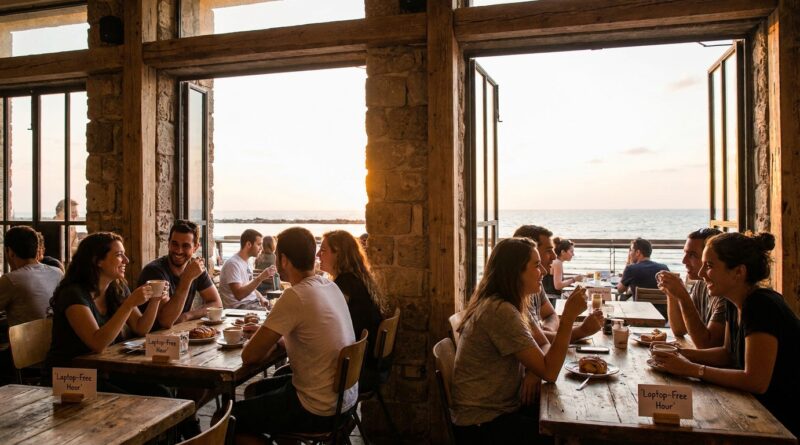
You can feel the problem the second you walk into most cafes now. Two friends sit across from each other, each with a laptop open, each half answering messages, and neither really there. People say they miss real conversation, but coffee breaks have quietly turned into remote work overflow. That is why the rise of the laptop free coffee shop Tel Aviv Port idea feels so timely. It is not anti-tech, and it is not some dramatic digital detox. It is simply a small, clear social cue. For a set window of time, you close the screen, look up, and let the place do what cafes used to do best. At Tel Aviv Port, with the sea nearby and the usual rush softened by the view, those laptop-free hours are becoming something more than a policy. They are becoming permission. Permission to pause, chat, notice people, and remember that sharing a table is supposed to feel different from sharing Wi-Fi.
⚡ In a Hurry? Key Takeaways
- Laptop-free coffee hours work because they remove the awkwardness. Everyone knows the room’s purpose for that time.
- If you run or visit a cafe, start with short, clearly posted laptop-free windows instead of a full-day ban.
- This is not about policing customers. It is a low-pressure way to reduce digital fatigue and make conversation easier.
Why this small idea is landing at exactly the right moment
People are tired. Not always physically tired. Digitally tired. Socially tired too.
Most of us spend all day bouncing between tabs, chats, alerts, and half-finished thoughts. Then we go out for coffee and bring the same habits with us. The result is a strange kind of public loneliness. You are around people, but not really with them.
That is why laptop-free hours feel different. They create a soft boundary in a world with very few of them. Nobody has to guess whether opening a MacBook is fine. Nobody has to feel rude for wanting a more human atmosphere. The expectation is simple, and because it is shared, it feels natural.
Why Tel Aviv Port is a particularly good place for it
Some places fight against conversation. They are too loud, too cramped, or too rushed. Tel Aviv Port has the opposite advantage. People come there ready to slow down, even if only for 20 minutes.
The sea helps. The walking paths help. The sense that you are slightly outside the normal work grind helps too. In a setting like that, a laptop-free coffee hour does not feel restrictive. It feels like the room is finally matching the location.
That matters for Cafe Nimrod. You do not need to reinvent the cafe or add something flashy. Good coffee, calm design, and a sea-level view already do a lot of the work. The laptop-free window simply gives those strengths a purpose.
What makes laptop-free hours work, instead of feeling annoying
1. They are limited, not absolute
A full ban can feel harsh. A short, predictable time block feels fair.
That is the secret. People do not mind adapting when the rule is clear and the timeframe is reasonable. A daily hour or two tells customers, “This is a moment for people first.” It does not tell them they are unwelcome if they need to work later.
2. They remove social friction
Normally, if one person wants to chat and the other wants to type, nobody says anything. Screens win by default.
A shared laptop-free window changes that. It removes the little negotiations people are tired of making. You can actually settle into the room without wondering whether everyone else is in office mode.
3. They create repeat behavior
When people know that, say, late morning or early evening is screen-light and conversation-friendly, they begin planning around it. A habit forms. Regulars return. Strangers become familiar faces.
That is often how community starts. Not with a huge event. With repetition.
It is not anti-tech. It is better use of tech boundaries
This is the part many people get wrong. Laptop-free coffee hours are not a protest against laptops. They are a way to stop one tool from taking over every setting.
Technology is useful. Remote work is real. Flexible cafes matter. But when every table becomes a workstation all day, something else disappears. Casual conversation. Eye contact. The little moments that make a neighborhood place feel local instead of transactional.
Good tech habits are often about context. You would not take a conference call into a yoga class. You would not set up a spreadsheet at the beach picnic. A laptop free coffee shop Tel Aviv Port concept just gives one corner of the day its own context again.
Why Cafe Nimrod is well positioned to make this feel natural
Some cafes try social ideas that feel forced. This one does not have to.
If a cafe already feels calm, local, and visually open, then laptop-free hours feel like an extension of its personality. They are not an event you have to “sell” too hard. They are a light touch. A nudge.
That same logic is why curated, low-pressure gatherings work well in places like this. If you want to see the cousin of this idea, Why Tel Aviv Port’s ‘Micro Creative Coffee Sessions’ Are Quietly Becoming the City’s New Collaboration Engine shows how small, structured social moments can turn a cafe into a real meeting point without making it feel like a networking event.
How to make the idea succeed without upsetting customers
Keep the messaging friendly
The wording matters. “Laptop-free coffee hours” sounds clear. Pair it with a warm explanation. Something like, “A daily hour to relax, reconnect, and enjoy the space screen-free.”
That feels welcoming, not scolding.
Pick smart time slots
Do not start with the busiest work-heavy stretch if your regulars depend on it. Test windows that naturally suit conversation, such as mid-morning breaks, late afternoon, or early evening.
The point is to create a social pocket, not a customer revolt.
Give people alternatives
If possible, keep other hours laptop-friendly. That balance makes people more willing to respect the screen-free slot.
Customers are usually flexible when they feel considered.
Train staff to explain, not enforce
The best version of this idea feels gentle. Staff should be able to say, with a smile, that this is a laptop-free hour and invite guests to enjoy the space differently for a bit.
No heavy hand needed.
What customers actually get out of it
For guests, the gain is bigger than it sounds.
You get a coffee break that feels like a break. You notice the person with you. If you come alone, the room feels less sealed off. A glance can become a chat. A regular face can become a connection. Even silence feels better when it is shared by present people instead of glowing screens.
And there is relief in not having to be productive every minute. That is part of the appeal too. A cafe can still be useful without acting as a backup office at all times.
At a Glance: Comparison
| Feature/Aspect | Details | Verdict |
|---|---|---|
| Atmosphere | Laptop-free hours make the room calmer, more social, and less like a co-working spillover zone. | Strong win for conversation and presence. |
| Customer flexibility | Short scheduled windows still leave plenty of time for guests who want to work on other hours. | Best when used as a limited daily practice, not an all-day rule. |
| Community value | Creates repeat rituals, easier interaction, and a stronger neighborhood feel at the port. | Quietly powerful, especially for independent cafes. |
Conclusion
People do not need another app to help them “connect.” Most of the time, they need a little help putting the screen down long enough to be where they already are. That is why the laptop free coffee shop Tel Aviv Port idea has real staying power. Right now, search interest for local, independent cafes is climbing while people report feeling lonelier and more digitally drained than ever. Creating small, clearly framed windows where guests know they can put the laptop away without guilt and actually connect turns Cafe Nimrod into a tiny daily antidote to isolation, using what you already have: good coffee, calm design, and a sea-level view that makes strangers feel like neighbors.