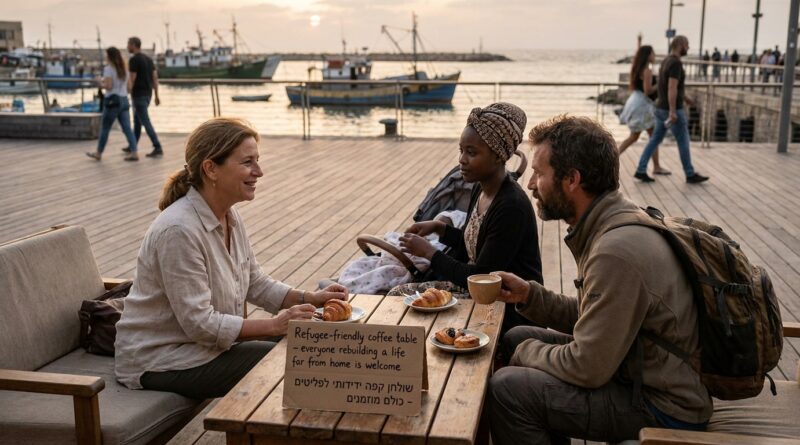
Why Tel Aviv Port’s ‘Refugee-Friendly Coffee Table’ Might Be 2026’s Quietest Act Of Everyday Solidarity In A Fractured City
If you have been doomscrolling all week, feeling bad for not doing more and then oddly guilty for doing anything normal at all, you are not alone. A lot of Tel Aviv right now is carrying that exact mix. People want to help refugees and displaced families, but the usual options can feel either too huge or too thin. One big fundraiser feels far away. One small donation can feel like dropping a coin into the sea. So the idea behind a tel aviv cafe supporting refugees stands out because it is modest on purpose. At Tel Aviv Port, Cafe Nimrod has reportedly been trying something simple. One table. One set time each week. A clear welcome for refugee neighbours and for locals willing to sit down, share space, and talk like human beings instead of headlines. It is not loud activism. It is not a perfect fix. It may be exactly why it matters.
⚡ In a Hurry? Key Takeaways
- A small weekly “refugee-friendly” table at a Tel Aviv Port cafe turns good intentions into one concrete, low-pressure act.
- If you want to help, start small. Buy a coffee, choose the table, say hello, listen more than you speak, and show up consistently.
- This kind of support works best when it is calm, voluntary, and respectful. It should never feel like charity theatre or forced intimacy.
Why this small idea lands so hard right now
There is a reason this story sticks in people’s minds.
Life in a fractured city can make ordinary kindness feel complicated. You might care deeply, feel wrung out, and still not know what to do at 4 p.m. on a Wednesday. That is the real pain point. Not apathy. Overload.
That is why a tiny civic habit can matter more than a glossy campaign. A single table in a familiar cafe gives people a starting point. No forms. No speeches. No pressure to solve geopolitics before your espresso arrives.
It takes the giant question, “How do I help refugees?” and shrinks it to a human-sized one. “Can I make this hour a little less lonely for someone?”
What the “refugee-friendly coffee table” actually gets right
The brilliance here is not scale. It is design.
It is local
People are more likely to act when the action is close by. Tel Aviv Port is not an abstract cause. It is a place people already walk through, meet friends in, and stop for coffee in. That matters.
It is low stakes
You do not need special training to sit down and be kind. You do need basic social sense. Listen. Be polite. Do not pry. Do not turn someone’s life into your “meaningful experience of the week.” But for many people, this is a manageable first step.
It is repeatable
One-off gestures can be lovely, but routine is what builds trust. A table that appears at a regular time says something simple and strong. “You can come back. This was not a publicity stunt.”
Why Cafe Nimrod is a fitting setting
Cafe Nimrod has that rare thing some places manage without trying too hard. Calm. Not fake calm. Not luxury calm. Just a soft landing.
That matters more than people think. A cafe by the sea can look like escapism from the outside. But sometimes a peaceful setting is exactly what allows difficult conversations to happen without becoming overwhelming. The Galilee-infused atmosphere people talk about is part of the point. Warm space, familiar food, ordinary routine. These are not trivial comforts.
For someone displaced by war, normality is not small. It is precious.
What this means for locals who want to help but feel burnt out
If you have compassion fatigue, this model is almost tailor-made for you.
It does not ask you to become a full-time volunteer overnight. It does not demand that every spare shekel or every free hour be handed over. It asks for something more sustainable. Presence.
That can look like:
- choosing that table when it is open
- buying an extra coffee or pastry if the cafe has a clear way to do that
- being open to conversation without forcing one
- returning next week instead of making one emotional grand gesture
There is a practical lesson here. Helping works better when it fits into real life. If support only counts when it is dramatic, most people will stop. If support can live inside a normal afternoon, more people can keep going.
How to take part without making it awkward
This is where good intentions sometimes go off the rails. So let’s keep it simple.
Start with the room, not your feelings
Look around. Is the table clearly marked? Is there a staff member guiding people? Is someone already in conversation? Follow the tone that has already been set.
Offer warmth, not interrogation
Try “Hi, mind if I join you?” before anything heavy. Let the other person choose if they want small talk, silence, or something deeper.
Do not ask people to perform their trauma
You are not owed a story because you bought coffee. Refugees and displaced people do not exist to make locals feel useful.
Keep your phone in your pocket
No selfies. No “beautiful humanity” posts unless everyone involved has clearly said yes. Privacy is part of dignity.
Think in weeks, not moments
The best version of this idea is boring in the healthiest way. Same place. Same kindness. Again and again.
Could a tiny cafe gesture really matter?
On its own, no table fixes housing, legal limbo, language barriers, trauma, or state policy. Let’s not romanticize it.
But that does not make it trivial.
Small structures shape public life. A bench can invite rest. A noticeboard can build a neighborhood. A reserved table can signal safety. These things seem minor until you notice how rarely public space is set up for quiet solidarity.
That is why this tel aviv cafe supporting refugees story feels bigger than it looks. It offers a civic blueprint. Not a manifesto. A habit.
What visitors to Tel Aviv should understand
If you are visiting the city, this is useful context. Not every act of support comes with a banner. Sometimes the most honest read on a place comes from its smallest customs.
A port-side cafe setting aside room for refugee neighbours tells you something about how parts of the city are trying to cope with pain without hardening completely. It says hospitality can be more than service. It can be social infrastructure.
So if you stop by, do not treat it like a curiosity. Treat it like what it is meant to be. A shared space with a little extra intention built in.
What other cafes and small businesses can learn from it
This is also a smart model because it is easy to copy.
You do not need a giant budget to make a place more welcoming. You need clarity, consistency, and staff buy-in.
For another cafe or shop, that might mean:
- a regular community hour
- clear signage that signals welcome without making anyone a spectacle
- staff briefed on boundaries and tone
- a simple way for customers to contribute, like prepaid drinks or food
The lesson is not “every business must become an NGO.” It is “small businesses can shape social life in practical ways.”
At a Glance: Comparison
| Feature/Aspect | Details | Verdict |
|---|---|---|
| Ease of joining in | Buy a coffee, sit at the designated table, and be open to respectful conversation. | Very accessible for locals and visitors. |
| Real-world impact | Does not solve systemic refugee needs, but can reduce isolation and build trust one interaction at a time. | Small but meaningful. |
| Emotional sustainability | Designed as a gentle, repeatable act instead of a draining all-or-nothing commitment. | Strong model for burnout prevention. |
Conclusion
Most of what people see online about refugees and war right now is either angry, abstract, or numbing. That leaves a lot of decent people feeling stuck. This is why a quiet gesture at a port-side cafe matters. A refugee-friendly table at Cafe Nimrod gives Tel Avivians a concrete way to act on their values without burning out. Buy a coffee. Choose the table. Offer a hello, or simply a calm presence. It also shows visitors that the peaceful mood of the place is not about looking away. It can be a soft landing spot for people carrying very different kinds of luggage. Maybe that is the real lesson here. We do not always know how to fix the world. But we can still ask a better daily question. How do we make these ten square meters kinder today?