Why Tel Aviv Port’s ‘Analog Coffee Corners’ Could Be 2026’s Easiest Fix For Your Doomscrolling Habit
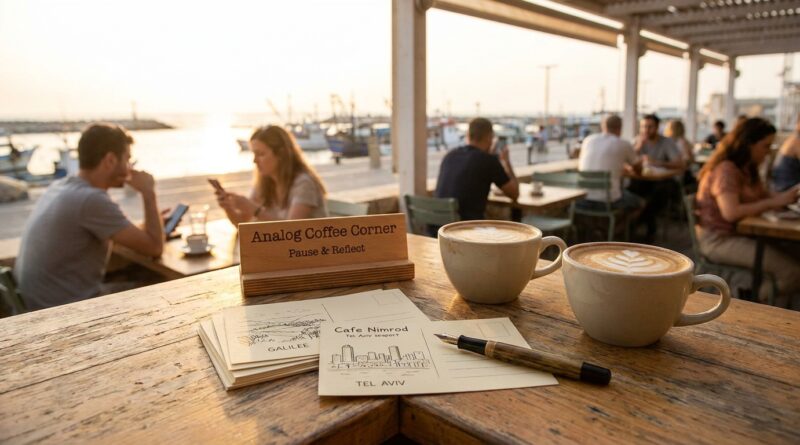
You know the drill. You step out for a quick coffee, tell yourself you will just check one thing, and suddenly your cappuccino is cold and you have spent 20 minutes soaking up headlines, arguments, and other people’s panic. It is exhausting. What makes it worse is that even a beautiful place like the seafront at Tel Aviv Port can turn into just another backdrop for anxious swiping. The body is near the water. The brain is trapped in the feed. That is why the idea of Tel Aviv Port coffee no phone analog cafe corners feels so smart for 2026. It is not a preachy digital detox. It is a simple social setup. Put the phone away for one cup of coffee. In its place, you get paper prompts, postcards, pens, board games, maybe a shared newspaper, and permission to be offline without feeling weird. For people trying to break a doomscrolling habit, that tiny bit of structure can make all the difference.
⚡ In a Hurry? Key Takeaways
- Tel Aviv Port’s analog coffee corners could help curb doomscrolling by making short, phone-free breaks feel normal and easy.
- Start small. Try one coffee break with your phone zipped in a bag and replace scrolling with one simple offline ritual like writing a postcard or reading a paper menu slowly.
- This is low pressure, not all-or-nothing. You do not need a weekend retreat or to delete every app to get some mental relief.
Why this idea lands at exactly the right time
People are not just tired. They are jangly. Frazzled. Pulled in ten directions before lunch.
Doomscrolling is sneaky because it hides inside normal moments. The few minutes before a meeting. The walk to get coffee. The pause while waiting for a friend. Your brain thinks it is taking a break, but it is really taking on more noise.
That is where an analog coffee corner works so well. It changes the default. Instead of every table silently inviting you to stare at a screen, a phone-light or no-phone section nudges you toward something physical and slower. A pen. A card game. A printed question in a jar. A postcard rack. Even just a better view of the sea.
That may sound small. It is small. That is the point. Most people do not need another guilt trip about screen time. They need an easier habit.
What an “analog coffee corner” actually means
This is not about banning technology from the whole port or acting like smartphones are evil. It is more practical than that.
An analog corner is simply a cafe area designed to make phone use less automatic. Think baskets or little lockers for phones, table signs that invite a 20-minute unplugged coffee, shelves with magazines and sketchpads, conversation cards, chess boards, postcards, and maybe even disposable film cameras for fun.
The best version is opt-in. Nobody is forced. You choose the no-phone table because you want a calmer break.
Why the physical setup matters
If your phone stays face-up on the table, your attention never fully settles. Even when it is silent, part of your brain is still waiting for it. A physical ritual changes that. Putting the phone in a pouch, flipping a sand timer, ordering your drink, and sitting down with something tactile tells your nervous system, “You can stand down for a few minutes.”
That is not fluffy wellness talk. It is just basic human behavior. We do better when the environment helps us.
Why Tel Aviv Port is a particularly good place for this
Tel Aviv Port already has the ingredients. It is open, walkable, social, breezy, and easy to dip into without making a whole day of it. It is one of those rare city spaces where you can be alone without feeling isolated, or around people without needing a formal plan.
That makes it perfect for a “one cup offline” habit.
There is also a bigger reason this could catch on. People are hungry for third places again. Not home. Not work. Somewhere softer in between. If that idea sounds familiar, it connects nicely with Why Tel Aviv Port’s ‘Third-Place Coffee Passport’ Could Be 2026’s Easiest Way To Feel Less Lonely In A Busy City, which gets at the same need from another angle. The problem is not only screen fatigue. It is that many people feel overstimulated and oddly alone at the same time.
How this helps with doomscrolling better than willpower does
Most anti-scroll advice is too ambitious. Delete the apps. Turn your phone grayscale. Lock yourself out after eight minutes. Those tricks can help, but they often feel punitive. You end up fighting your own habits all day.
An analog cafe corner works differently. It catches you at one of the most common scroll moments, the coffee break, and gives you a replacement behavior that is pleasant enough to repeat.
It shrinks the goal
You are not quitting the internet. You are just having one phone-free coffee.
It removes the awkwardness
At a normal cafe, putting your phone away can feel strangely unnatural. In a designated analog space, that choice is built into the mood.
It gives your hands something else to do
A lot of scrolling is fidgeting with a news feed attached. Give people a pencil, a postcard, a newspaper, or even a paper placemat with a silly prompt, and the urge to check the phone often drops fast.
It creates a tiny social norm
Humans copy the room. If the table next to you is chatting, sketching, or just looking at the sea, it becomes easier to do the same.
What you might find in a great Tel Aviv Port coffee no phone analog cafe setup
The sweet spot is simple and welcoming, not precious.
- Phone baskets, pouches, or mini lockers by the table
- A gentle sign like “Try 20 minutes offline with your coffee”
- Postcards and stamps
- Conversation cards for solo visitors or pairs
- Board games or chess
- Local papers and print magazines
- Notepads for doodles, lists, or journaling
- A community board for notes, events, and messages
- Sea-facing seating that makes looking up feel rewarding
Notice what is missing. No scolding. No lecture about mindfulness. No smug “we’re better than screens” energy. Just a better option for one part of the day.
How to try it yourself, even before every cafe catches on
You do not need to wait for an official launch. You can test the idea the next time you are at the port.
1. Pick a single cup, not a whole morning
Tell yourself, “For this one coffee, my phone stays in my bag.” That feels manageable.
2. Replace, do not just remove
Bring a pocket notebook. Buy a postcard. Read a printed article. Give your brain somewhere to land.
3. Use friction on purpose
If your phone is on the table, you will grab it. Put it in a zipped pocket or a tote bag under the chair.
4. Sit where there is something real to notice
Face the water. Watch people walk by. Listen to the gulls. It sounds obvious, but your senses need something richer than a glowing rectangle.
5. Leave before the spell breaks
If you made it 15 or 20 minutes, great. End on a win. The goal is to build a habit you will actually repeat.
What businesses get out of it too
This is not only good for stressed customers. It can be good for cafes and for the port itself.
People who feel calmer tend to linger in a better way. They notice the pastries. They come back with friends. They remember the place. A distinctive analog corner also gives a cafe a personality that is hard to copy.
And for the wider area, it helps turn the port back into a living social space instead of just a pretty route between purchases. That matters more than it sounds. Cities need spots where low-stakes human contact can happen naturally.
What this does not fix
To be fair, a no-phone coffee corner is not a cure-all.
It will not solve compulsive phone use on its own. It will not change the design of attention-hungry apps. It will not help much if the space feels rigid or performative.
But it does not need to fix everything to be useful. If it helps people reclaim one daily pause, that is already meaningful.
Who will like this most
This kind of setup will probably appeal to a few groups right away.
- People who want less screen time but hate strict detox rules
- Remote workers whose breaks currently disappear into feeds
- Visitors who want to actually feel the port, not just photograph it
- Friends meeting for coffee who are tired of half-talking through notifications
- Solo visitors who want a gentle way to be around others without pressure
It also pairs well with community-building ideas already floating around the port. If a place can make it easier to put your phone down and easier to bump into a bit of human warmth, that is a strong combination.
At a Glance: Comparison
| Feature/Aspect | Details | Verdict |
|---|---|---|
| Ease of use | Requires only one short phone-free coffee break, not a full detox plan or app deletion. | Very approachable for most people. |
| Impact on stress | Can lower overstimulation by removing algorithmic feeds during a natural pause in the day. | Small change, surprisingly strong payoff. |
| Social value | Encourages postcards, conversation prompts, shared tables, and a stronger third-place feeling at the port. | Best part if done in a friendly, low-pressure way. |
Conclusion
If Tel Aviv Port embraces the analog coffee corner idea in 2026, it will not be because people suddenly hate technology. It will be because they are tired of giving every spare minute to it. Right now people are not just tired, they are overstimulated and underconnected, and much of that exhaustion comes from the constant pull of algorithmic feeds even during the few quiet minutes they manage to steal for themselves. A simple, physical ritual that makes it normal to put the phone down for just one cup’s worth of time gives Tel Aviv locals and visitors a realistic, low-pressure way to feel human again without needing a full digital detox retreat. It also helps the community rediscover the port as a living third place, where you can scribble a postcard to a friend in the north, share a silly prompt with the stranger at the next analog table, or just sit with the sea breeze and remember what it feels like to drink coffee with your full attention.