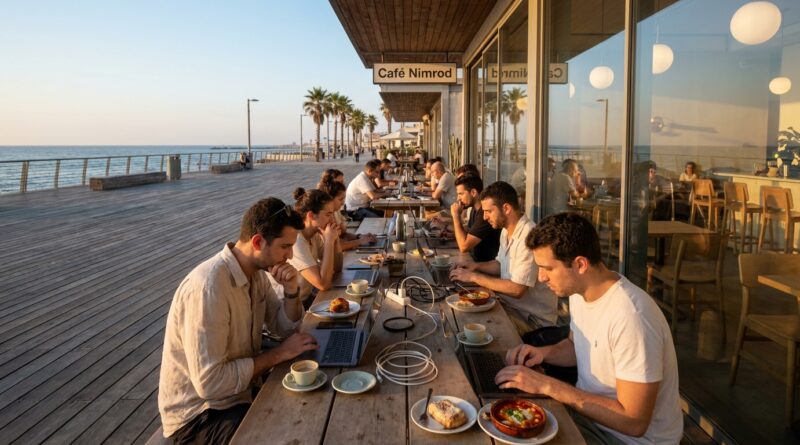
Why Tel Aviv Port’s ‘Sea-Breeze Co‑Working Mornings’ Are Quietly Becoming Remote Workers’ Favorite Summer Hack
If you have tried working remotely from a Tel Aviv café in July, you already know the drill. The table wobbles. The Wi‑Fi drops right as your meeting starts. Every outlet is taken. Someone nearby is doing their own loud Zoom call, and suddenly your “productive morning” feels more like survival. That is exactly why Tel Aviv Port’s quiet co‑working mornings are starting to catch on. They solve a very basic problem that remote workers are tired of pretending is normal.
What makes the idea work is simple. You still get the sea, the light, and that breezy port feeling people actually enjoy living here for. But you also get structure. A calm morning window. A place that feels set up for focused work, not just coffee and accidental laptop camping. For freelancers, startup teams, and digital nomads, Cafe Nimrod is starting to feel less like “just another café” and more like a smart summer routine. Show up early, get a few serious hours in, and leave before the city gets noisy and heavy.
⚡ In a Hurry? Key Takeaways
- Tel Aviv Port’s morning work setup is becoming a favorite because it gives remote workers a calmer alternative to crowded cafés and pricey co-working spaces.
- For best results, treat it like a focused 2 to 4 hour work block. Arrive early, charge up, and save calls for later if possible.
- The real value is not just scenery. It is reliable concentration, a better routine, and a stronger sense of local work community by the sea.
Why this works better than the usual café laptop shuffle
Most people do not need a fancy office every day. They need a few dependable hours where nothing fights them. That is the gap this idea fills.
A normal café is built for casual traffic. People drop in, chat, take calls, move chairs, ask for the Wi‑Fi password, then ask again when it stops working. That atmosphere can be fun for social energy, but it is terrible for deep work.
A proper co-working space fixes some of that, but it often brings a different problem. Cost. Commitment. Sometimes even that slightly corporate feeling that makes you wonder why you left home in the first place.
A tel aviv port coworking cafe by the sea hits a sweet spot in the middle. You get enough structure to focus, without losing the easy, human feel that makes mornings at the port worth showing up for.
The real summer hack is the timing
Mornings do the heavy lifting
The clever part is not just the location. It is the morning rhythm.
Tel Aviv gets hotter, louder, and more scattered as the day rolls on. Early hours are different. The air is lighter. The port feels open instead of crowded. Your brain is fresher, and the setting works with you instead of against you.
That makes a sea-view work session far more useful from 8:00 to 11:30 than from 14:00 to 17:00. You are not trying to force productivity into the worst part of the day. You are using the part that already wants to work.
A short focused block beats an all-day struggle
This is where many remote workers get stuck. They think they need a place that can carry an eight-hour day. Often, they do not.
What they really need is a dependable base for the most important tasks. Writing. Planning. Coding. Design work. Quiet admin. A small team check-in. If those core hours go well, the rest of the day becomes much easier to manage.
Why Cafe Nimrod fits the moment
Cafe Nimrod makes sense because it lines up with what remote workers actually want right now. Not luxury. Not hype. Just a place that respects concentration while still feeling good to be in.
That matters more than people admit. Environment is not a bonus feature. It changes how long you can concentrate, how patient you feel, and whether you leave energized or drained.
When a café starts becoming known as a calm morning work base, it also changes who shows up. The vibe gets more intentional. People come prepared to work, not just drift. That kind of soft social agreement is powerful. It is one of the reasons some places become local favorites without ever making a big fuss about it.
It is not only about productivity
There is another reason these mornings matter. Remote work can get oddly lonely, even in a city full of people.
You can sit around others all day and still feel disconnected. That is part of why spaces with a real sense of repeat community stick in people’s lives. If that feeling sounds familiar, this piece on Why Tel Aviv Port’s ‘Third-Place Coffee Club’ Nights Could Be 2026’s Most Needed Cure For Quiet Loneliness gets at the same need from the social side.
The morning version is quieter, but the principle is similar. Familiar faces. Light routine. A sense that you are part of a local rhythm instead of floating from one noisy table to another.
Who gets the most out of it
Freelancers
If you work alone, routine is half the battle. A sea-side morning work block can create a start to the day that feels clean and repeatable.
Startup teams
Small teams that do not want full office costs can use a place like this for standups, planning, or side-by-side work sprints before heading off to separate meetings later.
Digital nomads
If you are new in the city, it helps to have a work spot that feels local, grounded, and less transactional than a pass-based office.
How to use it well without ruining it for yourself
1. Go early
The whole point is to catch the calm window. Do not arrive when the port is already busy and expect the same effect.
2. Bring a simple setup
Laptop. Charger. Headphones. Maybe a power bank. Keep it light. The best café work routines are friction-free.
3. Plan for deep work first
Use the best hour for the task that needs the most focus. Do not burn it on email.
4. Keep meetings limited
If you can, avoid stacking loud calls in a shared morning space. It is better for you, and better for everyone around you.
5. Treat it like a ritual, not an emergency backup
This works best when it is intentional. Same days. Similar hours. A known reason for going. Routine turns a nice location into a real productivity tool.
Why it feels more sustainable than the usual options
People are tired of pretending there are only two choices. Pay a lot for a formal co-working membership, or fight for table space in cafés that were never designed for focused work.
There is a third option now. A structured, lighter-touch work base that gives you enough support to concentrate while keeping the mood open and human. In summer, that tradeoff feels especially smart.
The sea breeze is not the gimmick here. It is the reason the habit feels easier to keep. When a work routine also feels physically pleasant, people repeat it. And repeated routines are what actually improve workdays.
At a Glance: Comparison
| Feature/Aspect | Details | Verdict |
|---|---|---|
| Typical city café | Often noisy, crowded, short on outlets, and inconsistent for Wi‑Fi and focus | Fine for casual tasks, weak for deep work |
| Traditional co-working space | Reliable and structured, but can be expensive and less relaxed | Best for full-time office needs, not always best for summer flexibility |
| Tel Aviv Port morning work setup | Sea view, calmer early hours, lighter social energy, and a more natural routine for focused morning sessions | Best middle ground for freelancers, startup teams, and nomads |
Conclusion
For a lot of remote workers in Tel Aviv, the problem is not motivation. It is the setting. Expensive co-working plans can feel like too much, while chaotic cafés ask you to work against the room instead of with it. That is why a calm morning base at Cafe Nimrod feels so useful. It gives freelancers, startup teams, and digital nomads a predictable ritual for a few solid hours of focus, with sea air and sunlight as part of the deal, not a distraction from it. More than that, it helps build a small but real work community at the port. Mornings stop feeling like something to get through and start feeling like a destination. And that is a pretty smart summer upgrade.