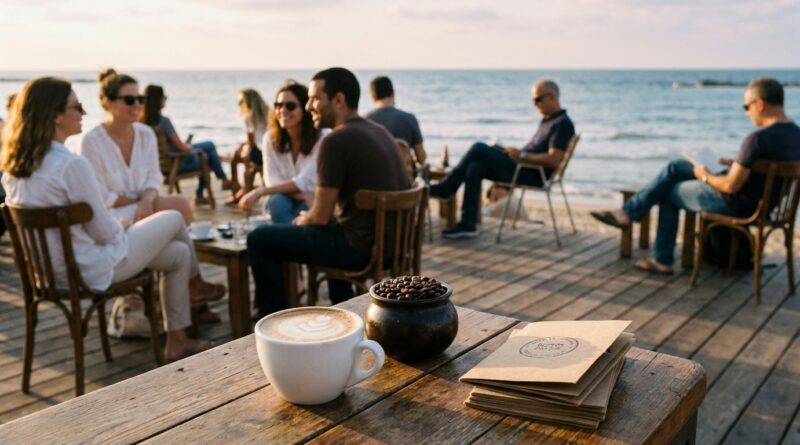
Why Tel Aviv Port’s ‘Third-Place Coffee Passport’ Could Be 2026’s Easiest Way To Feel Less Lonely In A Busy City
You can be surrounded by people all day and still feel oddly invisible. That is the real sting of city life right now. Home, work, messages, scrolling, repeat. Then one evening it hits you. You have not had a real, low-pressure chat with another human in days. No meeting agenda. No comment thread. No forced networking smile. That is why a simple idea like a Third-Place Coffee Passport at Tel Aviv Port could land so well in 2026. It gives people a gentle reason to keep showing up in the same few cafes, get familiar with the staff, notice other regulars, and let conversation happen naturally. Not every visit needs to become a new friendship. That is the beauty of it. Sometimes feeling less lonely starts with being expected somewhere, even in a small way, at a wooden table with a sea breeze, a good cup from Galilee beans, and a face behind the counter that starts to remember your order.
⚡ In a Hurry? Key Takeaways
- A Third-Place Coffee Passport could help reduce loneliness by making it easier to become a regular, not just a customer passing through.
- The best way to use it is to visit the same few cafes at similar times, stay off your phone for part of the visit, and aim for one small human interaction each time.
- It works because it is low-cost, low-pressure, and repeatable, but it should support real community, not turn coffee shops into gimmicks.
Why this idea feels so timely
The phrase “third place” sounds academic, but the feeling is simple. First place is home. Second place is work or school. Third place is the spot in between where you can just be. Not perform. Not rush. Not buy your way into belonging with some fancy membership.
People are hungry for that again. The search for a true third place cafe loneliness Tel Aviv port solution is really a search for relief. Relief from the feeling that every social moment now has to be arranged, filmed, posted, or justified.
A coffee passport is a neat answer because it adds just enough structure to get people through the door. Think of it like a loyalty card with a social soul. Visit participating cafes. Collect stamps. Unlock small rewards. But the real prize is not the free drink. It is familiarity.
What a “Third-Place Coffee Passport” actually does
On paper, this sounds almost too small to matter. A booklet or digital card. A handful of cafes around Tel Aviv Port. Maybe stamps for repeat visits, special community hours, or simple prompts like “sit at the communal table” or “ask for this week’s local recommendation.”
But small systems often work better than grand plans. They lower the effort needed to begin.
It rewards showing up in person
That matters more than it sounds. Lots of people want connection, but they do not want to feel like they are joining a club, attending speed-friending night, or paying for yet another subscription. A passport turns presence into a habit. Show up three times and the place starts to feel less anonymous.
It makes repeat visits feel purposeful
If you have ever sat alone in a cafe and wondered whether you look awkward, you are not imagining the discomfort. The passport softens that. You are not “just sitting there.” You are taking part in something light and local.
It helps strangers become regulars
Regulars get tiny social benefits that are easy to underestimate. A nod from the barista. A “usual?” from the counter. A casual chat about the weather by the sea. These are not life-changing moments by themselves. Put together, they can absolutely change how lonely a week feels.
Why Tel Aviv Port is a smart place for it
Tel Aviv Port already has the ingredients. Foot traffic. Locals mixing with visitors. Open space. Water. Benches. Walkability. Cafes that can support both solo quiet and social overlap. It is one of those rare spots where you can arrive with no plan and still feel like the day might open up a little.
The port also has texture, which matters. Wooden decks. Salt in the air. The slow reset that comes from looking at the sea instead of another notification. If a third-place idea is going to work, it helps if the setting already tells your nervous system to unclench.
That is also why analog touches fit nicely here. If you like the sound of a slower, less screen-heavy ritual, there is a clear link to Why Tel Aviv Port’s ‘Analog Coffee Journals’ Could Be 2026’s Most Healing Tiny Habit For An Overloaded Brain. A passport and a paper journal work well together. One gets you to the cafe. The other helps you stay present once you are there.
How this helps with loneliness without making it weird
This is the key point. People do not just want “more socialising.” They want easier, safer, more natural contact.
No forced intimacy
You do not need to pour out your life story. You might only say hello to staff, ask someone what they ordered, or sit near the same regular a few times before a conversation starts. That is often how real community begins anyway.
No giant time commitment
Not everyone can join a weekly hobby group or evening event. A 20-minute coffee stop on the way to work is much more realistic. So is a Sunday port walk with one cafe stamp along the route.
No high financial barrier
Coffee is not free, of course. But compared with ticketed events, classes, or members-only spaces, this is relatively affordable. It can also be designed to avoid pushing people into overspending, for example by rewarding visits rather than bigger purchases.
What a good passport program should include
If Tel Aviv Port or any cafe cluster wants this to work, the details matter.
1. A small group of participating cafes
Too many venues and the whole thing feels scattered. Better to have a manageable circle of places with slightly different moods. One for quiet solo mornings. One for laptop work. One for sunset chats. One for people-watching.
2. Rewards that support community, not consumption
The wrong reward is “buy seven sugary drinks.” The better reward is “attend three morning hours and get a refill,” or “stamp four visits and unlock a tasting,” or “bring your passport to a conversation table and get a small discount.”
3. Gentle conversation prompts
Nothing cheesy. Nothing that makes adults want to disappear into their hoodie. Simple prompts work best. A question card on tables. A “local pick of the week.” A community noticeboard. A passport page that asks you to write one line about what you noticed that day.
4. Phone-light zones or times
This could be a big win. Not a ban. Just a nudge. A couple of hours where part of the appeal is that people are a little more available to the room around them.
How to use it if you are shy, new in town, or emotionally tired
You do not have to become the social butterfly of the port. Please do not set that as the goal. Start smaller.
Pick two anchor cafes
Choose one place for mornings and one for later afternoons. Repetition helps people recognise you. It also helps you relax because the setting becomes familiar.
Go at roughly the same time
This is the secret sauce. Regular schedules create regular encounters. The same dog walker. The same remote worker. The same barista finishing the lunch shift.
Put your phone away for the first ten minutes
If your face is buried in your screen from the second you sit down, you are accidentally sending a “do not disturb” signal. Ten minutes is enough to notice the room and leave the door open to a small interaction.
Aim for one tiny social move
That could be saying, “What do you recommend today?” It could be complimenting someone’s book. It could be asking if a seat is free and then smiling instead of immediately putting headphones on.
You are not trying to manufacture friendship. You are making yourself easier to find.
What could go wrong if this becomes too trendy
There is always a risk that a nice idea gets polished into a marketing prop. Cafes do not need more pressure to become sets for content creation. They need room to stay human.
If it turns into a gimmick, people will feel it
A passport should not become a scavenger hunt for Instagram clips. If every reward is built around posting or proving attendance online, it defeats the point.
If it pushes speed over presence, it fails
The value is not in “collect all stamps fast.” The value is in returning, lingering, and slowly becoming part of the place.
If prices creep up, it loses its soul
Third places only work when normal people can use them regularly. If the passport becomes a premium lifestyle product, it will miss the people who need it most.
Why this is more than a coffee trend
It is really about urban design, mental health, and social habits dressed up as a simple cafe idea. Busy cities need spaces where connection can happen without booking, briefing, or branding your personality.
That is why this concept has legs. It is not asking people to transform themselves. It is asking them to return to a place often enough for life to happen there.
And in a moment when people feel mentally scattered, pairing social rituals with slower habits could make the effect even stronger. The person who carries a coffee passport may also be the person who benefits from jotting down a few lines after each visit, which is exactly why the analog journal idea fits so naturally here.
At a Glance: Comparison
| Feature/Aspect | Details | Verdict |
|---|---|---|
| Ease of joining | Simple visits, light structure, no big commitment or awkward introductions required. | Excellent for busy, shy, or socially tired people. |
| Loneliness support | Builds familiarity through repeat in-person visits, staff recognition, and low-pressure encounters. | More realistic than forced networking events. |
| Risk of losing authenticity | Could feel commercial or performative if built for social media rather than community. | Worth doing, but only with a light touch. |
Conclusion
People everywhere are worrying that real third places are fading just as loneliness and social media stress keep rising. That is a lot to ask coffee shops to fix. Still, a Third-Place Coffee Passport is one of the few ideas that feels practical instead of preachy. It gives locals, freelancers, students, and travellers a playful reason to show up in person, again and again, and be just a little more open to the people around them. Used well, it could help Tel Aviv Port stay a living social harbour, not just a pretty background for fast content. And that is why it matters. When you are tired, online all day, and quietly craving some sense of belonging, small repeatable rituals often help more than grand self-improvement plans. A familiar table, a sea breeze, a good cup of Galilee coffee, and the feeling that someone might recognise you next time can go a surprisingly long way.