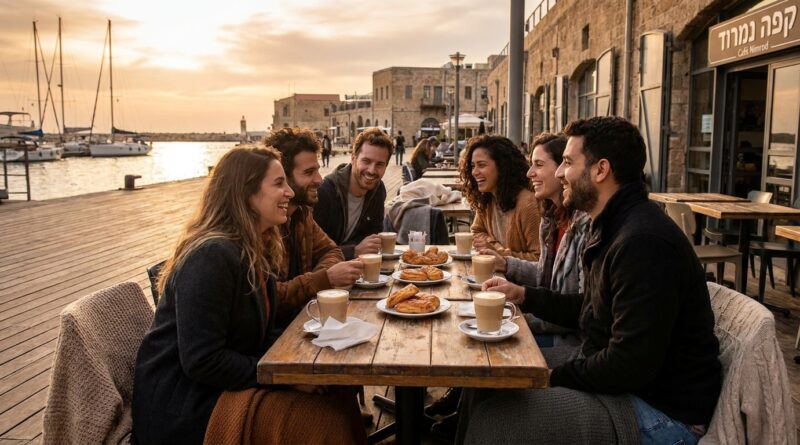
Why Tel Aviv Port’s ‘Micro-Coffee Clubs’ Could Be 2026’s Easiest Way To Find Your People In The City
Big meetups can feel like homework in nicer clothes. You show up, shout over music, swap a few names you forget by morning, then go home wondering why “being social” felt so tiring. A lot of Tel Avivians know that feeling. They do want more real-life connection. They just do not want another packed networking night or another app that turns friendship into endless browsing. That is why the idea of a micro coffee club Tel Aviv port setup feels so smart for 2026. Keep it small. Keep it local. Keep it repeated. Instead of one big event, a handful of people meet for coffee in the same area over several weeks. That small change matters more than it sounds. Familiar faces lower the pressure. A walkable spot like Tel Aviv Port makes it easy to show up. And somewhere between the sea breeze, the wooden decks and the smell of Galilee coffee, strangers get the one thing city life often forgets to give them. Enough time to become familiar.
⚡ In a Hurry? Key Takeaways
- Micro coffee clubs work because they replace one-off events with small, repeat meetups that actually help friendships grow.
- If you want to try one, aim for 4 to 6 people, a fixed cafe area in Tel Aviv Port, and a simple weekly time for at least a month.
- The format is low-pressure, affordable, and safer than random large events because the group size stays manageable and familiar.
Why small coffee clubs make more sense than big social events
Most adults do not struggle with meeting people once. They struggle with meeting the same people enough times for trust to form.
That is the flaw in a lot of city social life. It gives you exposure, not connection. You can attend ten events and still not feel known by anyone.
A micro coffee club Tel Aviv port model fixes that by doing something very basic. It shrinks the social load. You are not entering a room of 80 strangers. You are sitting with a small group, often in daylight, often with coffee in hand, and often with the comfort of knowing you will see them again next week.
That repeat contact is not a small detail. It is the whole point.
Why Tel Aviv Port is the right setting for it
Location matters more than people think. If a social idea is annoying to reach, hard to find, or too chaotic once you arrive, people stop coming.
Tel Aviv Port has a few built-in advantages. It is walkable. It feels open. It gives people easy exits if they feel tired, which oddly makes them more likely to stay. There is movement, but also room to breathe. You can grab coffee, sit outside, take a short stroll by the water, and continue a conversation without the strange pressure of a formal event.
That physical setup helps shy people and tired people alike. It does not demand performance. It just gives people a place to return to.
Familiar places make friendship easier
There is a reason people still talk about the loss of “third places.” Home is private. Work is practical. But friendship often grows in the in-between spaces. Cafes, promenades, corners you can return to without making a big plan.
If this idea sounds familiar, it connects neatly with Why Tel Aviv Port’s ‘Third-Place Coffee Passport’ Could Be 2026’s Easiest Way To Feel Less Alone In The City, which gets at the same core problem. People are not only looking for coffee. They are looking for a place where showing up starts to mean something.
What a micro coffee club actually looks like
This does not need to be complicated. In fact, the simpler it is, the better it works.
Basic format
A good micro-club usually looks like this:
- 4 to 6 people
- One consistent meeting spot in or around Tel Aviv Port
- One fixed time each week or every other week
- A run of 4 to 6 meetups before people decide whether to continue
That structure removes the usual friction. Nobody has to renegotiate the plan from scratch every time. People know where to go, when to arrive, and who they are likely to see.
Why the repeated format works
Friendship rarely arrives in one perfect conversation. More often it grows in layers. The first meeting is polite. The second is easier. By the third or fourth, people remember details. They ask follow-up questions. Jokes return. Trust starts to appear.
Apps are very good at introducing people. They are less good at creating the conditions where familiarity can quietly build. A micro-club fills that gap.
Who this idea is especially good for
Not everyone wants a giant social calendar. Some people just want a few solid connections nearby.
This setup is especially helpful for:
- People new to Tel Aviv
- Remote workers who miss casual human contact
- Locals who have outgrown loud nightlife but still want community
- People recovering from social burnout
- Anyone tired of chatting online without ever meeting in person
It is also useful for people who do not love the word “networking.” A coffee club is not about pitching yourself. It is about returning often enough for people to stop feeling like strangers.
How to start a micro coffee club without turning it into a project
This is where many good ideas fall apart. They get overplanned. Then nobody starts.
Keep the invite simple
Do not write a manifesto. Try something like: “A few of us are meeting for coffee at Tel Aviv Port every Thursday morning this month. Small group, no pressure, just a chance to get to know people.”
Set a clear size limit
If 20 people show up, you are back in meetup territory. Small is the feature, not the bug. Cap it at six if the goal is real conversation.
Use light structure
You do not need icebreakers that feel like a team-building seminar. But one simple prompt can help. Ask things like:
- What brought you to Tel Aviv?
- What do you miss from your old routine?
- What is one place in the city that already feels like yours?
That is enough to get past small talk without making people squirm.
Pick consistency over novelty
Same place beats trendy place. Same time beats endless scheduling polls. You are trying to reduce decision fatigue, not add to it.
What could go wrong, and how to avoid it
Any social format can drift off course. The good news is the fix is usually straightforward.
If conversation feels stiff
Give it another week. The first session is often the awkward one. People are still reading the room.
If people keep canceling
The group may be too big, too vague, or scheduled badly. Morning coffee tends to work better than late-night plans for consistency.
If one person dominates
A host can gently redirect. “I want to hear everyone’s take on that.” You do not need to be harsh. Just keep the table balanced.
If the group loses momentum
Set a minimum season from the start. Four meetups is a good baseline. People commit more easily when there is a clear shape to the plan.
Why this could catch on in 2026
The timing makes sense. People are more aware of loneliness now, but also more skeptical of big, polished “community” experiences that feel transactional. They want something real, but not intense. Structured, but not stiff. Social, but not performative.
A micro coffee club Tel Aviv port idea lands right in that sweet spot. It gives just enough structure to get people out the door, and just enough softness to let connection happen naturally once they arrive.
That balance matters. Too much freedom and nobody commits. Too much structure and it feels like work.
At a Glance: Comparison
| Feature/Aspect | Details | Verdict |
|---|---|---|
| Group size | Usually 4 to 6 people, which makes conversation manageable and memorable. | Best for real connection |
| Location feel | Tel Aviv Port offers walkability, open space, coffee spots, and an easy, low-pressure setting. | Strong fit for repeat meetups |
| Commitment level | A short series of weekly or biweekly meetups keeps it gentle without feeling random. | Low friction, high value |
Conclusion
Not every answer to loneliness has to be dramatic. Sometimes the better fix is smaller. A regular table. A familiar cafe. The same few faces. A micro coffee club gives people a simple, low-friction way to move from scrolling alone to sitting with the same small group over several weeks, which is exactly how trust and friendship usually grow. In a moment when everyone is talking about loneliness and the loss of real third places, this kind of gentle format could help Tel Aviv locals and port regulars find their people in a way that feels natural, affordable and human. Between the sea, the port, and the smell of Galilee coffee, that may be more than enough to get something real started.