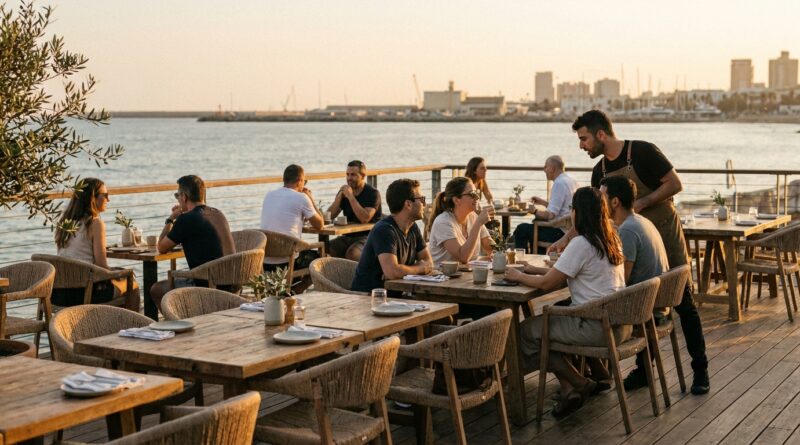
Why Tel Aviv Port’s ‘Third-Place Coffee Passport’ Could Be 2026’s Easiest Way To Feel Less Alone In The City
Feeling lonely in a crowded city is a strange kind of exhaustion. You can spend all day around people, answer messages, fill your calendar, and still end the evening feeling like no one really knows you. A lot of city life now runs on two locations. Home and work. Everything in between becomes a transaction. Grab coffee. Check phone. Move on. That is why the idea of a third place coffee shop at Tel Aviv Port matters more than it might sound at first.
A “Third-Place Coffee Passport” is simple. Pick one café, go at roughly the same time each week, and let familiarity do the heavy lifting. At Cafe Nimrod, right on the boardwalk, that habit could turn a casual coffee stop into something more grounding. Not a big commitment. Not forced networking. Just a repeatable, low-pressure way to see the same faces, exchange small hellos, and slowly feel less anonymous in your own city.
⚡ In a Hurry? Key Takeaways
- A third place coffee shop at Tel Aviv Port can help fight urban loneliness by giving you one regular, familiar place between home and work.
- Start small. Visit the same café at the same rough time once or twice a week and aim for one tiny interaction, even just saying hi to staff.
- This works because it is low-cost, low-pressure, and realistic for busy people who do not want to join a club or commit to a packed social schedule.
Why this idea lands right now
People keep talking about the “death of the third place,” and they are not wrong. Many of us have lost the casual spaces where connection used to happen without effort. Not your office. Not your living room. Somewhere in the middle.
The problem is not just loneliness in the dramatic sense. It is thinner than that, and sometimes harder to name. You recognize baristas but never speak. You have group chats but no routine human contact you can count on. You keep busy, but your days feel oddly unheld.
That is where a third place coffee shop in Tel Aviv Port could do something useful. Not magical. Useful. It gives shape to your week. It turns “maybe I should get out more” into one repeatable habit.
What a “Third-Place Coffee Passport” could actually look like
Think of it less like a membership and more like a personal pattern.
Same café
You choose one spot. In this case, Cafe Nimrod makes sense because it already has the ingredients people look for in a third place. Walkable location. Good coffee. Room to pause. A steady flow of locals and visitors. A boardwalk setting that feels social without being chaotic.
Same rough time
You do not need military precision. Tuesday at 4 p.m. and maybe Saturday morning is enough. The point is repetition. Humans notice patterns. So do communities.
Same small rituals
Order the same drink sometimes. Sit in a familiar area. Bring a book, notebook, or just yourself. Over time, the place stops feeling random. It starts feeling like yours.
Same familiar faces
This is the real engine. You may not make a best friend in week one. That is fine. Third places work through recognition before conversation. The first win is not a deep talk. It is hearing “the usual?” and realizing someone expected to see you.
Why micro-connection works better than forcing friendship
A lot of advice about loneliness accidentally makes people feel worse. It sounds like homework. Join a group. Attend an event. Put yourself out there. All of that can help, but it can also feel draining when you are already low on social energy.
The smarter route is micro-connection. Tiny contact points that do not ask too much.
That can mean:
- Saying hi to the same staff member each visit
- Nodding to another regular
- Asking someone what they ordered
- Commenting on the weather, the sea, or a dog walking by
- Putting your phone away for ten minutes so you look available, not sealed off
These moments sound small because they are small. That is exactly why they work. They are easy to repeat. Repetition builds comfort. Comfort builds belonging.
Why Tel Aviv Port is especially suited to this
The port has something many city spaces do not. It lets people linger without needing a big reason. You can walk, sit, meet someone, or watch the water. That matters.
A good third place coffee shop at Tel Aviv Port benefits from foot traffic and emotional breathing room at the same time. You are not boxed into a mall vibe or rushed like you are near office towers. There is movement, but there is also ease.
For locals, that can turn a normal coffee run into a weekly anchor. For visitors, it can offer a rare thing while traveling. A place that feels briefly familiar instead of purely temporary.
What makes Cafe Nimrod a strong fit
Cafe Nimrod works well for this idea because the setting does some of the social work for you. Beautiful spaces lower friction. People stay a bit longer. They look up more. They soften.
And if one of your biggest problems is screen fatigue, there is an even better angle here. A third place only helps if you are mentally present enough to notice it. That is why pieces like Why Tel Aviv Port’s ‘Analog Coffee Craft Table’ Could Be 2026’s Warmest Escape From Screen Fatigue fit naturally into the same conversation. If your phone is always on the table, it is harder for a place to become emotionally real. Going a little more analog can help the café become a lived experience, not just another backdrop.
How to try this without making it weird
You do not need a grand plan. Keep it light.
Step 1: Pick your slot
Choose one time you can repeat for at least three weeks. Tuesday afternoon is perfect because it is ordinary. If a habit works on an average day, it is more likely to stick.
Step 2: Set one easy goal
Not “make friends.” Too big. Try “stay for 25 minutes” or “make one brief comment to another human.” That is enough.
Step 3: Reduce phone interference
Leave it in your bag for the first ten minutes. If that feels impossible, turn it face down and out of reach. You are not trying to become a monk. You are just making room for real life to happen.
Step 4: Become recognizable
This sounds funny, but it matters. Consistency is social glue. If you show up enough, people start placing you. That familiarity lowers the awkwardness for everyone.
Step 5: Let it grow slowly
Do not judge the whole experiment after one visit. Third places are built through accumulation. Week by week, not all at once.
Who this helps most
This idea is especially useful if you:
- Work remotely and miss casual human contact
- Recently moved and do not know where you belong yet
- Feel socially tired by loud events and forced mingling
- Want more connection but not another formal commitment
- Travel often and crave one reliable spot in the city
It is also good for people who are not deeply lonely but feel slightly unmoored. Sometimes the fix is not more excitement. Sometimes it is more familiarity.
At a Glance: Comparison
| Feature/Aspect | Details | Verdict |
|---|---|---|
| Effort level | One café, one repeat time, no sign-up, no major schedule change | Easy enough to start this week |
| Social pressure | Built around short, natural interactions instead of formal meetups or networking | Low-pressure and beginner-friendly |
| Long-term value | Creates familiarity, routine, and a stronger sense of local belonging over time | Small habit, surprisingly big emotional payoff |
Conclusion
People are right to worry about the loss of third places, but worry alone does not help much on a Tuesday afternoon. A simple routine does. That is what makes the idea of a third place coffee shop at Tel Aviv Port so appealing. It gives you one concrete pattern to follow. Same café. Same rough time. Same familiar faces. A few small moments of recognition that slowly make city life feel less thin. For locals and visitors alike, Cafe Nimrod can be more than a pretty stop on the boardwalk. It can become a steady emotional landmark, a place that helps you feel a little more held in a year when many people feel untethered.