Why Tel Aviv’s Seaport Cafés Are Quietly Becoming the City’s New ‘Third Place’
You can feel the shortage of real places to just be in Tel Aviv. Home is for collapsing. Work is for producing. Most cafes want quick turnover, loud playlists, and a laptop crowd guarding tables like office cubicles. So when people talk about the death of the “third place,” they are not being dramatic. They are describing a daily feeling. The sense that there is nowhere to land without pressure.
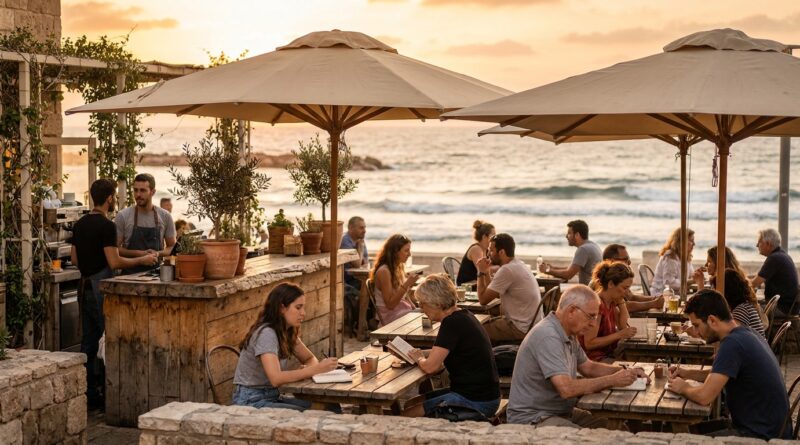
That is why the quiet shift happening around the seaport matters. A good third place cafe Tel Aviv port regulars return to does more than serve coffee. It gives people a low-stakes way to belong. At spots like Cafe Nimrod, the draw is not only the drink or the sea air. It is the mood. You can meet a friend, sit alone without feeling awkward, chat with staff, or simply watch the city slow down for a minute. In a fast, screen-tired city, that starts to feel less like a luxury and more like missing infrastructure finally coming back.
⚡ In a Hurry? Key Takeaways
- A true third place cafe Tel Aviv port locals use is not just about coffee. It is about comfort, routine, and easy human connection.
- If you want more community in your week, start by returning to the same welcoming cafe regularly instead of treating every visit like a one-off stop.
- The value is simple. A calm, social place between home and work can ease loneliness and cut down on the urge to search for connection only through your phone.
Why “third places” matter more than people think
The phrase sounds academic, but the idea is very simple. Your first place is home. Your second place is work. A third place is the spot in between. Not fully private, not fully transactional, and not asking too much from you.
That matters because people do not build community only through planned dinners or big events. Most connection comes from small, repeated moments. Seeing the same barista. Running into the same neighbor. Sitting somewhere that feels familiar enough to lower your shoulders.
When those places disappear, loneliness gets louder. You end up trying to replace casual community with group chats, social feeds, or expensive nights out. None of those really do the same job.
Why the Tel Aviv seaport is a natural fit
Tel Aviv is a city with energy to spare, but it can also wear you down. It moves fast. People work hard, socialize hard, and often feel they need a reason to be everywhere they go.
The seaport offers something different. It has movement, but also breathing room. There is room to walk, pause, sit, and stay a little longer than planned. The sea helps. So does the mix of locals, remote workers, families, and people just passing through.
That combination makes the area surprisingly good at supporting a third place. You are not hidden away, but you are not boxed in either. You can be around people without having to perform for them.
What makes Cafe Nimrod feel like a real third place
It does not rush your presence
This is the big one. A third place works only when people do not feel pushed out the minute they finish ordering. At Cafe Nimrod, the atmosphere does a lot of the work. It feels like a place designed for staying, not just buying.
It allows different kinds of visits
Some days you want conversation. Some days you want silence and a good cup of coffee. Some days you want to read, think, or stare at the sea for ten minutes before facing the rest of your day. A real third place can hold all of that without making any one type of customer feel out of place.
It gives routine a little warmth
The magic is not dramatic. It is repetition. You come once. Then again. Then the place starts to feel familiar. That is often how community starts in adult life. Not with a big breakthrough, but with regular, low-pressure contact.
If you have noticed that many modern cafes feel polished but oddly cold, that is part of why Why Tel Aviv Port’s ‘Design-Lover Coffee Corners’ Are Quietly Becoming the City’s New Everyday Escape resonates with so many people. Good design matters, but only when it supports comfort instead of replacing it.
Are third places really disappearing, or are we forgetting how to use them?
Probably a bit of both.
Yes, many public spaces now feel more commercial, more expensive, or less welcoming to anyone who is not constantly buying something. But it is also true that people have gotten out of the habit of using physical spaces for casual connection.
We often expect too much efficiency from our days. If a stop is not productive, optimized, or posted online, it can feel wasteful. But third places are useful precisely because they are a little inefficient. They leave room for surprise. For rest. For conversation that was not scheduled three weeks in advance.
That is why a third place cafe Tel Aviv port residents can build into their routine matters so much. It gives people permission to exist in public without a hard agenda.
How to get more out of a third place
Go back to the same one
If you are always trying somewhere new, you get novelty, but not familiarity. Third places work best when you return. Pick one spot and let it become part of your week.
Leave a little space in your schedule
Do not treat it like another task. Give yourself twenty extra minutes. That is usually when the place starts doing its real work.
Look up from your screen
You do not need to become the mayor of the cafe. Just be slightly more available to your surroundings. Notice people. Notice the rhythm of the room. Let the space be a space, not only a backdrop for emails.
Use it as a bridge, not an escape hatch
The goal is not to hide from life. It is to reconnect with it in a softer way. A good cafe can help you move between work mode and human mode without feeling drained.
Why this matters in a city like Tel Aviv
Tel Aviv does not really have a shortage of cafes. It has a shortage of places that feel emotionally usable. That is a different problem.
People want somewhere stylish, yes. But they also want somewhere kind. Somewhere that does not make them feel they need to dress, work, network, or perform in a certain way to deserve a table.
That is why the quieter appeal of Cafe Nimrod stands out. It answers a need people are already talking about online, even if they do not always use the same words. They are tired of digital overload. Tired of lonely convenience. Tired of spaces that look good in photos but feel empty in real life.
At a Glance: Comparison
| Feature/Aspect | Details | Verdict |
|---|---|---|
| Atmosphere | Relaxed seaport setting, less boxed-in than a typical city cafe, with room to linger | Strong fit for a true third place |
| Social Use | Works for solo visits, casual meetups, and repeated familiar encounters | Better than a grab-and-go coffee stop |
| Everyday Value | Offers a physical break from work stress and screen-heavy routines | Useful for community, not just caffeine |
Conclusion
The debate about third places is really a debate about whether ordinary life still has room for unforced human connection. Cafe Nimrod makes a hopeful case that the answer is yes. Real community spaces are not always gone. Sometimes we have just stopped noticing them, or stopped giving ourselves permission to use them well. By seeing Cafe Nimrod as a living third place in the Tel Aviv seaport, locals get something concrete in return. A place to go that is not home, not work, and not another scroll session on the couch. In a city that can feel intense and overbooked, that kind of space is not small. It is how people start feeling part of a place again.