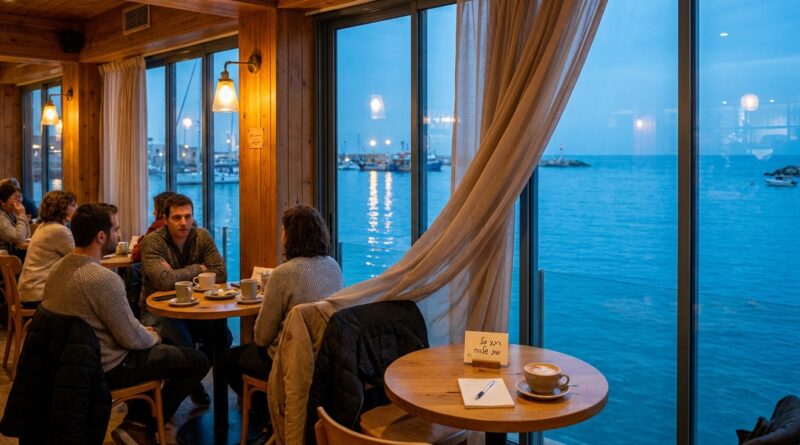
Why Tel Aviv Port’s ‘Wind‑Down Coffee Hour’ Could Be 2026’s Gentlest New After‑Work Ritual
You know that feeling when the workday ends, but your nervous system does not get the memo? You leave the office, check one more headline, answer one more message, and somehow arrive home more tense than when you left. That is why the idea of an after work coffee ritual Tel Aviv port feels so appealing right now. Not because coffee is magic, and not because anyone needs another trendy wellness fix. It works because it is simple. You stop in a familiar place, sit near the sea, hold one warm cup, and give your brain a clear signal that the day is over. For a lot of people, that small pause could be more useful than another loud bar, another rushed errand, or another evening lost to doomscrolling. If Tel Aviv Port turns this into a real “Wind-Down Coffee Hour” in 2026, it may end up being one of the gentlest and smartest local habits to start.
⚡ In a Hurry? Key Takeaways
- A “Wind-Down Coffee Hour” at Tel Aviv Port could offer a calm, repeatable way to shift from work stress to personal time.
- To make it work, keep it low-pressure: one drink, a short walk, your phone away for 20 minutes, and no big social expectations.
- The real value is not the caffeine. It is the ritual, the sea air, and the feeling of landing somewhere human after a hard day.
Why this idea hits a nerve
Most people are not actually bad at relaxing. They are bad at switching gears. That is different.
After work, your body is still carrying meetings, traffic, news alerts, family logistics, and the low-level buzz of city life. So when someone says, “Just unwind,” it can sound almost funny. With what time? In what headspace?
A gentle evening ritual solves a more realistic problem. It does not ask you to reinvent your life. It just gives your day a softer ending.
That is what makes an after work coffee ritual Tel Aviv port such a strong idea. The setting already does half the job. You have the sea, open space, people around you but not too close, and enough movement to feel alive without feeling crowded. You are not trapped at home with your screen. You are not forcing yourself into nightlife when you are already drained.
What a “Wind-Down Coffee Hour” could actually look like
The best version of this would be calm, not performative.
Not a party
This should not feel like a happy hour with louder music and branded neon signs. People already have enough stimulation. The point is the opposite. Lower lights. Softer sound. A menu built for early evening. Maybe small pastries, herbal options, half-caf choices, and seating that invites people to stay for 20 or 30 minutes without feeling rushed.
Not another wellness lecture
No one wants to be told they are “healing” while trying to drink a coffee near the water. The charm here is that it feels normal. Ordinary, even. You finish work, you go to the port, you pause, then you continue home feeling a little more like yourself.
A clear line between work and home
This may be the biggest benefit. Rituals matter because they mark transitions. The cup is part of it. The location is part of it. The walk is part of it. Together, they create a small mental border. Work stays on one side. Evening starts on the other.
Why Tel Aviv Port is the right place for it
Some places naturally help people unclench. Tel Aviv Port is one of them.
It is familiar. That matters more than people think. A ritual only sticks when it feels easy to repeat. You do not want a reset that requires a booking, a dress code, or a 40-minute debate with yourself. You want somewhere you already know how to reach.
The port also gives people choices. Sit alone. Meet a friend. Walk first, then get a drink. Drink first, then watch the sky change. It is structured enough to feel safe and open enough to feel free.
And if your brain is especially fried by the day’s alerts, this idea sits nicely beside Why Tel Aviv Port’s ‘Storm-Weather Coffee Refuge’ Could Be 2026’s Gentlest Reset For News Overload. That piece gets at something many people feel but do not always name. By late afternoon, we are often not exhausted. We are overstimulated.
The quiet genius of a repeatable ritual
Big life changes get all the attention. New career. New apartment. New “better you” system with color-coded rules.
But small rituals often do more good because people can actually keep them.
A repeatable evening stop asks less from you, which means it gives more back. It does not need to fix your job, your inbox, or the state of the world. It just needs to lower the volume for half an hour. That is enough to change the tone of a whole night.
That matters if you live alone. It matters if you share a home and need a few minutes before stepping back into family life. It matters if your default evening has become sitting on the couch with your phone, feeling both overstimulated and oddly isolated.
How to make this ritual work in real life
If you want to try your own version, keep it almost boringly easy.
1. Pick a simple time window
Do not overplan it. Aim for one or two evenings a week, right after work. If you wait until later, it turns into another decision and often disappears.
2. Order the same “transition drink” most days
This can be a small filter coffee, a decaf cappuccino, tea, or anything that feels steady. Repetition helps. The point is not novelty. The point is telling your brain, “We are here now. Work is done.”
3. Put your phone away for the first 20 minutes
This is the hard part, and also the part that works. If you spend the whole stop reading alerts, you have just moved your stress to a nicer location.
4. Add one tiny grounding habit
Walk the boardwalk before sitting down. Face the water. Breathe before your first sip. Notice the breeze. It sounds small because it is small. That is why it is realistic.
5. Leave before it turns into another obligation
The sweet spot is usually short. You want to leave feeling restored, not like you accidentally scheduled one more event into your evening.
Who this is especially good for
This kind of ritual is not only for coffee lovers.
It is great for people who have mentally noisy jobs. People who work with screens all day. People who finish work feeling scattered instead of simply tired. It is also good for anyone trying to replace the “I need a drink to switch off” habit with something gentler and more sustainable.
It can help couples too. Meeting at the port for one calm cup is often easier than organizing a full dinner out. Less pressure. Less money. More room to just arrive as you are.
What could ruin it
Like many good ideas, this one would fall apart if it tries too hard.
If it becomes packed, loud, expensive, or too branded, the spell breaks. If every corner is optimized for social media photos, people stop feeling at ease and start performing. A wind-down ritual should feel welcoming, not curated within an inch of its life.
The best version would protect quiet without making the place feel stiff. Think warm service, comfortable seating, gentle pacing, and enough room for both solo visitors and small groups.
At a Glance: Comparison
| Feature/Aspect | Details | Verdict |
|---|---|---|
| Mood | Sea air, open space, low-pressure seating, a calmer alternative to bars or rushing straight home | Excellent fit for decompression |
| Practicality | Easy to repeat after work, familiar location, works for solo visits or quick meetups | Very realistic as a weekly habit |
| Well-being Value | Helps mark the end of the workday, lowers evening stress, gently reduces loneliness and doomscrolling | Small ritual, surprisingly big payoff |
Conclusion
Right now, a lot of people feel like they need to redesign everything just to feel a little better. New jobs. New cities. Extreme detoxes. But sometimes relief comes from something much smaller and much kinder. A simple, repeatable evening ritual in a real place can do a lot. That is the promise of an after work coffee ritual Tel Aviv port. It gives people a place to land after hard days, to let the sea air and one thoughtfully brewed cup mark the line between “done for today” and “I’m home now.” That is not trivial. It lowers the pressure on nights, gently pushes back against quiet stress and loneliness, and reminds both locals and visitors that even in a loud, fast city, small human pauses are still available. And honestly, we could all use more of those.