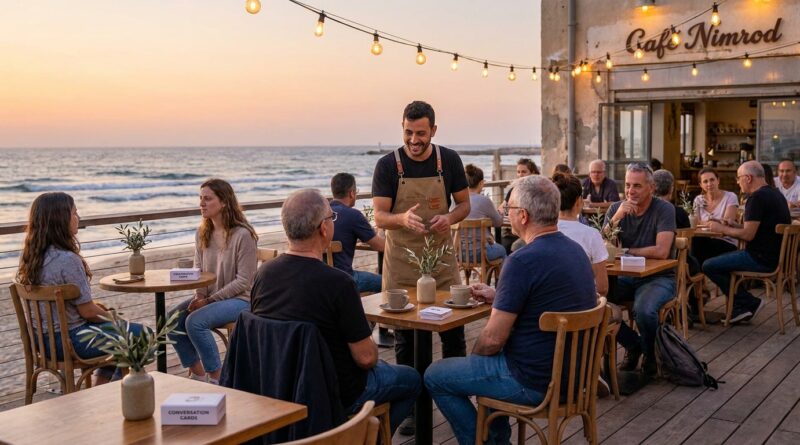
Why Tel Aviv Port’s ‘Third-Place Coffee Evenings’ Are Quietly Becoming the City’s New Way To Actually Feel Less Alone
It is a strange kind of lonely when you live in a busy city and still end up spending the evening alone with your phone. You scroll. You read bad news. You tell yourself you should go out more. Then you remember most places in town either feel like work, home, or somewhere you need to keep buying things to justify staying. That is why the rise of the third place cafe Tel Aviv Port scene matters more than it may seem. A weekly coffee evening at the port is not just another event. It gives people something many quietly miss. A place to show up, exhale, sit near others, and maybe talk without needing a big plan, a wingman, or a loud party mood. For locals, new arrivals, and travelers, these evenings are starting to fill a gap city life often leaves behind. Not with hype. With warmth, rhythm, and a feeling of being expected.
⚡ In a Hurry? Key Takeaways
- A third place cafe at Tel Aviv Port works because it gives people a regular, low-pressure space to belong outside home and work.
- If you want to feel less isolated, choose recurring community evenings over one-off nights out. Familiar faces make conversation easier.
- The real value is not just coffee. It is a safe, welcoming setting where talking to strangers feels normal, not awkward.
Why this matters right now
A lot of people are not looking for a huge social life. They are looking for one good hour.
One hour where they do not need to network. One hour where they are not sitting at home half-watching a show and half-reading headlines that make them feel worse. One hour where being around people feels natural again.
That is what a real third place does. It sits between the two poles of modern adult life. Not home. Not work. Just a place where you can exist, return, and slowly become familiar.
For years, cities had more of these spaces. Cafés where people lingered. Community spots where nobody rushed you out. Corners where showing up alone was completely fine. Many of those habits faded. Prices went up. Screens took over. People got used to isolation without ever really liking it.
What makes a third place cafe Tel Aviv Port different
Location helps, of course. The port already has something people crave after a long day. Air. Space. Water. A reason to walk a little slower.
But a seaside setting alone does not create community. Plenty of beautiful places still feel socially closed. You can sit near twenty people and not feel connected to any of them.
The shift happens when a café becomes predictable. Same night each week. Same welcoming tone. Same soft invitation to stay a bit longer. That regularity matters more than people realize.
Consistency beats novelty
One-off events can be fun, but they do not always build belonging. A weekly coffee evening does something better. It lowers the social cost of coming.
If you miss one week, there is another. If you are shy the first time, you can come back. If you only talk to one person, that still counts. Community often starts in tiny, almost forgettable moments.
It removes the pressure to perform
Not everyone wants a loud bar, a networking mixer, or a full-on nightlife scene. Some people want music low enough to think, tables close enough to chat, and an atmosphere where they can arrive alone without feeling like they made a mistake.
That is why these coffee evenings are quietly working. They are social, but not demanding. Warm, but not intense.
The loneliness problem nobody likes to admit
Many adults feel embarrassed about loneliness. They think they should have figured this out by now. They live in a city full of people, yet they still do not have an easy answer to a simple question. Where do you go if you just want to be around others without a whole production?
That is the pain point. It is not always a lack of contacts. It is a lack of easy, repeatable spaces where connection can happen naturally.
A good third place solves this by making casual interaction normal again. You do not need an agenda. You do not need to be fascinating. You just need a seat, a drink, and a small opening.
Why coffee works better than people expect
Coffee is useful socially because it is neutral. It does not carry the same pressure as dinner. It is not as chaotic as a club. It gives your hands something to do and your evening a shape.
There is also a small but important psychological trick here. Coffee evenings feel temporary and manageable. You can tell yourself, “I’ll go for forty minutes.” That is much easier than committing to a big night out.
Once people arrive and feel comfortable, many stay longer.
The café becomes the social technology
Think of the café like simple, well-designed tech. The best tools get out of the way and make something hard feel easy. A good third place does the same. It lowers friction.
There is seating. There is a reason to come. There is a built-in rhythm. No awkward explanation needed.
For people who feel rusty socially, that matters a lot.
Who these evenings help most
Not just one type of person.
Locals who feel disconnected
You can live in Tel Aviv for years and still feel oddly cut off. Friends get busy. Work expands. People pair off, move neighborhoods, or disappear into routines.
A weekly evening gives locals a way back into shared city life without having to “start over” socially.
New arrivals
If you just moved to the city, every social outing can feel like a test. Are people coming in groups? Will everyone already know each other? Will you feel obvious for being alone?
A true third place softens that fear. It says, come as you are. No backstory required.
Travelers
Travel can be exciting and isolating at the same time. A warm café by the sea, especially one with a repeating community feel, gives travelers a rare thing. A temporary sense of belonging.
Why the Galilee-inspired feeling matters
People respond to spaces that feel human. A Galilee-inspired seaside café suggests something grounded, calm, and generous. Not polished within an inch of its life. Not trying too hard.
That feeling matters because lonely people do not need more stimulation. They need ease.
When the room feels warm and unpretentious, conversation starts more naturally. Someone comments on the view. Someone asks what you ordered. Someone remembers your face from last week. That is how community begins. Not with a grand speech. With a few small repetitions.
It is part of a bigger shift in how people want to gather
People are getting tired of social formats that leave them drained. They want connection without the hangover, the noise, or the sense that everything has to turn into a big event.
That is why gentler gatherings are catching on around the port. You can see a similar mood in Why Tel Aviv Port’s ‘Coffee & Dance Reset Mornings’ Are Quietly Becoming the City’s New Sober-Party Trend. Different format, same basic need. People want real energy, real people, and less pressure.
The common thread is simple. They are looking for places that make human contact feel easy again.
How to make the most of it if you go alone
If you are curious but nervous, that is normal. Going somewhere alone still feels harder than it should.
Arrive early
It is usually easier to settle in before a place gets busy. You can choose a comfortable seat and let the room come to you.
Stay off your phone for the first ten minutes
This is the hardest tip and probably the best one. Looking at your phone creates a shield. Sometimes you want that shield. But if your goal is to feel less alone, give yourself a short window to be available to the room.
Use simple openers
You do not need charm. Ask if someone has been there before. Comment on the setting. Ask what drink they recommend. Ordinary conversation is enough.
Come back
The second visit matters more than the first. Familiarity is where awkwardness starts to fade.
What businesses often miss about community
Many venues think community means programming every minute or turning every gathering into a branded experience. Usually, that just makes people feel managed.
Real community often comes from restraint.
Good lighting. Friendly staff. Seating that makes conversation possible. Music that leaves room for voices. A tone that says you can linger a while.
The best third place cafe Tel Aviv Port model is not trying to impress people into connection. It is making connection feel safe enough to happen on its own.
At a Glance: Comparison
| Feature/Aspect | Details | Verdict |
|---|---|---|
| Atmosphere | Calm seaside setting, warm café energy, low-pressure social vibe | Excellent for people who want connection without noise or nightlife stress |
| Social Ease | Recurring weekly format makes it easier to return, recognize faces, and start small conversations | Better than one-off events for building real familiarity |
| Value Beyond Coffee | Offers a dependable third place for locals, newcomers, and travelers who want to feel part of something | High social value. Quietly helps reduce isolation |
Conclusion
Sometimes the biggest city problem is not traffic or rent or even stress. It is the quiet feeling that there is nowhere simple to go where you can just be with other people. That is why these coffee evenings at Tel Aviv Port matter. They give people a third place that feels natural, repeatable, and warm. Right now a lot of people feel disconnected, even in cities packed with life, and they are actively searching for real-world spots where it is normal to talk to strangers without it being weird. By turning a Galilee-inspired seaside café into a consistent, weekly third place, you are not just serving coffee, you are quietly solving loneliness: giving Tel Aviv locals, new arrivals and travelers a predictable, safe and warm space to meet real people, share small stories and remember what it feels like to be part of a community.