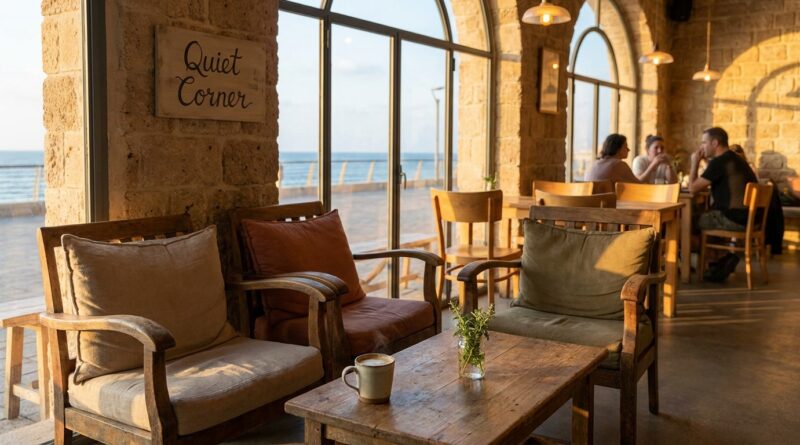
Why Tel Aviv Port’s ‘Quiet Corners for Overstimulated Travelers’ Might Be 2026’s Most Needed Airport-Style Reset Without The Flight
You know the feeling. You arrive at Tel Aviv Port after a noisy train ride, a long day at work, or too many hours staring at a laptop, and your body is technically here but your brain is still somewhere between Slack, traffic, and that message you forgot to answer. You wanted sea air, coffee, maybe ten decent minutes to yourself. Instead, the crowds, the music, and the buzz can make even a beautiful place feel like one more thing to process. That is why the idea of “quiet corners for overstimulated travelers” matters so much. Not travelers with boarding passes. Regular people. Locals, tourists, freelancers, parents, anyone whose nervous system feels a little fried. A thoughtfully designed quiet coffee shop Tel Aviv port setup could give people something most places forget to offer, which is a real sense of arrival. Not luxury. Not wellness theater. Just a seat, softer sound, fewer interruptions, and permission to breathe.
⚡ In a Hurry? Key Takeaways
- Quiet corners at Tel Aviv Port could work like a mini airport lounge for your brain, minus the flight, giving people a simple place to reset.
- Use a basic ritual when you sit down: put your phone away for five minutes, take a breath, sip slowly, and look at the sea before doing anything else.
- This is low-cost, low-pressure comfort, and far more useful for many people than another loud café packed with stimulation.
Why this idea hits a nerve right now
Travel burnout is no longer just about airports and jet lag. Plenty of people feel wrung out without leaving the city. The commute is long. The office is loud. Meetings pile up. Notifications never stop. By the time you reach somewhere that is supposed to feel pleasant, your senses are already full.
That is what makes this concept so smart. A few intentional quiet corners inside a popular port café can act like a reset button. Not in a magical way. In a human way. Less visual clutter. A little space between tables. Softer sound. A sea view that asks nothing from you.
People do not always need a full day off. Sometimes they need ten calm minutes that actually feel calm.
What a “quiet corner” should actually do
If this is going to help, it cannot just be a normal table with a cute sign. The whole point is reducing friction for an overstimulated brain.
Lower the sensory load
Think softer lighting, less foot traffic, and seating that faces the water or a calmer direction instead of the busiest walkway. Even small changes matter. When your brain is overloaded, every extra sound and movement asks for attention.
Make the ritual obvious
A good quiet corner gently tells you what to do without sounding bossy. Sit. Put the phone down. Take a breath. Sip slowly. Look out for a minute. That is enough. The beauty is how ordinary it is.
Keep it welcoming, not precious
This should not feel like a members-only wellness pod. It should feel easy. You are tired, not auditioning for a mindfulness retreat. Good hospitality means making calm accessible to normal people on a random weekday.
Why Tel Aviv Port is the right place for it
Tel Aviv Port already has one huge advantage. It gives you a change of atmosphere without demanding a full escape plan. You get open sky, the sea, room to walk, and the mental shift that comes from being near the water. For many people, that is already half the reset.
But anyone who has been there at a busy hour knows the other half of the story. It can still be a lot. Families, music, conversations, bikes, phones, people coming and going. Great energy, yes. Calm, not always.
That is why a quiet coffee shop Tel Aviv port concept makes so much sense. It does not fight the port’s character. It balances it. You can still enjoy the life of the place without being swallowed by it.
This is not about being antisocial
It is worth saying out loud because people often feel guilty for needing quiet. Wanting a calmer space does not mean you dislike people. It means your brain has limits. So does everyone else’s, whether they admit it or not.
The best public places understand this. They offer different modes. Chatty tables. Work tables. Fast coffee. Slow coffee. Lively corners and gentler ones. Good design respects the fact that human beings are not all in the same mood at the same time.
That is also why the idea pairs so well with Why Tel Aviv Port’s ‘Mindful Matcha & Slow Coffee Table’ Might Be 2026’s Most Calming Antidote To Overstimulated Brains. Both ideas understand a simple truth. A break only helps if it actually feels different from the rush you just left.
How to use a quiet corner so it really works
Here is the part many people miss. The space helps, but the ritual matters too. If you sit down and instantly reopen all 37 mental tabs, the setting can only do so much.
Start with a tiny rule
Give yourself five phone-free minutes. Not forever. Just five. Most people can handle that, especially if the sea is in front of them and the coffee is decent.
Use your drink as a pace setter
Do not gulp it while scrolling. Hold the cup. Notice the warmth. Take slower sips than usual. It sounds basic because it is basic. That is why it works.
Look at one thing that is not a screen
The water. The horizon. The wooden deck. A boat in the distance. Your eyes and attention both need a wider view once in a while.
Leave slightly better, not transformed
You do not need a life-changing breakthrough. If you leave feeling 15 percent less scrambled, that is a win. Enough small wins like that can change your whole week.
Who benefits most
Almost anyone, honestly. But some groups would probably feel the value right away.
Remote workers
If home and work have blurred into one long, blurry shift, a calm port café corner can create a real boundary. You arrive. You settle. You think more clearly.
Commuters
After trains, buses, and traffic, your nervous system is often still braced for impact. A quieter stop before heading home can stop the stress from following you through the evening.
Tourists
Not every visitor wants more activity. Some want a soft landing. A quiet coffee shop Tel Aviv port option can be the difference between “nice area” and “I actually enjoyed being here.”
Parents and caregivers
People who spend their days looking after everyone else rarely get transitional space. A few calm minutes by the sea can feel surprisingly restorative.
Why this matters more than another trendy feature
Cafés are often very good at aesthetics and not always great at comfort. The chair looks nice. The playlist is cool. The cups are photogenic. Meanwhile, you cannot hear yourself think.
Quiet corners flip the priority. They say the customer’s nervous system matters too. That is not old-fashioned. It is modern in the best way. We are finally talking more openly about anxiety, social fatigue, and fragmented attention. Public spaces should catch up.
And unlike expensive wellness ideas, this one is practical. It does not ask people to buy a package, sign up for a program, or pretend they have endless free time. It meets them where they are.
At a Glance: Comparison
| Feature/Aspect | Details | Verdict |
|---|---|---|
| Noise and stimulation | Quiet corners reduce sound, movement, and visual overload compared with standard busy café seating. | Best for people arriving mentally exhausted. |
| Ease of use | No booking, membership, or big time commitment needed. Just sit, breathe, sip, and look at the sea. | Simple and realistic for everyday life. |
| Community value | Makes the port feel more humane by offering care and comfort, not just food and foot traffic. | A smart upgrade with real local value. |
Conclusion
Sometimes the most needed reset is not a trip. It is a place that helps you arrive. That is why quiet corners at Tel Aviv Port could be one of 2026’s smartest ideas. Travel-style burnout is showing up even in people who have not left the city. Long commutes, open offices, back-to-back meetings, and the constant rush wear people down. By creating a few intentional “arrival” corners inside a beloved port café, locals, tourists, and remote workers get a practical way to reset without needing a vacation, a therapist appointment, or an expensive retreat. Right now, when anxiety and scattered attention are high, a simple ritual matters more than ever. Sit. Breathe. Sip. Look at the sea. That is not small. That is useful. And it sends a quietly powerful message that hospitality can care about your nervous system just as much as your coffee order.