Why Tel Aviv Port’s ‘One-Table Coffee Strangers’ Nights Could Be 2026’s Kindest Cure For Urban Loneliness
You can live in Tel Aviv, answer messages all day, pass a hundred faces before lunch, and still not have one easy person to text for coffee tonight. That feeling is more common than people admit. Urban loneliness does not always look dramatic. Sometimes it just looks like a full calendar, a noisy brain, and no simple way back into real company.
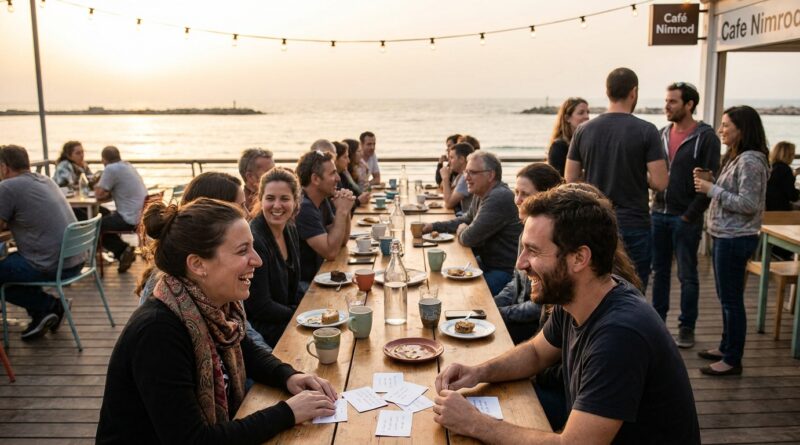
That is why Tel Aviv port cafe events to meet new people matter more than they might seem. A recurring “One-Table Coffee Strangers” night at the port could be one of 2026’s kindest ideas because it removes the hardest part, which is starting. No dating-app vibe. No forced business-card energy. Just a set time, a shared table, decent coffee, and permission to be a little awkward for ten minutes until you are not. For a city that runs on speed, that kind of gentle structure can feel like a small public service. It gives lonely people something better than advice. It gives them a place to sit.
⚡ In a Hurry? Key Takeaways
- A “Coffee Strangers” night works because it turns meeting new people into a simple, repeatable ritual instead of a social gamble.
- If you feel isolated, choose one recurring event at a familiar cafe and go twice before deciding whether it is “for you.”
- The value is not instant best friends. It is safer, lower-pressure, face-to-face connection that helps rebuild everyday community ties.
Why this idea lands right now
Tel Aviv is great at motion. It is not always great at landing.
You can be constantly surrounded by activity and still feel socially underfed. Work chats replace real chats. Group plans stay vague. People mean well, but everyone is busy, tired, and half-distracted. Restarting a social life from scratch can feel weirdly hard once you are out of school, new to the city, recently single, between jobs, or simply worn down.
That is why the best social ideas are often not flashy. They are practical. They lower the friction.
A one-table coffee night does exactly that. It does not ask you to “put yourself out there” in some giant heroic way. It asks you to show up, order something warm, and share a table with other people who also showed up for the same reason.
What makes “One-Table Coffee Strangers” different
It gives people a neutral script
Most adults do not struggle with talking. They struggle with beginnings.
A recurring event solves the opening line problem. You do not need a clever reason to approach someone. The reason is already built in. You are both there for the same table. That matters more than it sounds.
It is not a networking event in disguise
People can smell pressure. The minute a room feels transactional, everyone gets stiffer.
The charm of a coffee-based meetup is that it can stay human-sized. No pitches. No peacocking. No need to explain your job in an impressive way. You can talk about neighborhoods, books, sleep, stress, parents, beach walks, bad dates, or where to find a good late-night pastry. In other words, normal life.
It uses ritual, not hype
One-off events are nice. Repeating events change lives.
If the night happens every week or every two weeks, people do not have to solve loneliness in one brave evening. They can come once, leave early, come back, recognize a face, and slowly build familiarity. That is how “strangers” become “people I sort of know,” and then maybe “friends.”
Why coffee is doing more work here than you think
Coffee is not magic. But it is socially useful.
Holding a cup gives your hands something to do. Sitting in a cafe gives you a shared rhythm. There is an arrival, an order, a sip, a pause. All of that softens the sharp edges of meeting someone new.
It also helps that a port cafe feels public without feeling exposed. You are not trapped. You are not isolated. You are in a place with movement, light, and background noise. For many people, that makes social risk feel manageable.
There is also a deeper point. A city needs spaces where people do not have to earn their right to be present. A table, some chairs, and a warm drink can do that quietly.
Loneliness is not just a mood
More people are talking openly about loneliness now, and that is healthy. It is not just “being in a funk.” It can affect sleep, stress, concentration, confidence, and even how hopeful the week feels.
When people say they are tired, they are often not only tired. They are overloaded and underconnected at the same time. That is part of why gentle public rituals matter. They regulate the nervous system a bit. They make the city feel less anonymous.
If that sounds familiar, you might also relate to Why Tel Aviv Port’s ‘Storm-Weather Coffee Refuge’ Could Be 2026’s Gentlest Reset For News Overload, which gets at the same basic truth. A lot of people are not lazy or antisocial. They are simply overstimulated and need a softer place to reconnect.
Who these nights are especially good for
This kind of event can help almost anyone, but it is especially useful for a few groups.
People new to Tel Aviv
If you moved for work, study, or a fresh start, it can be surprisingly hard to build a casual circle. A recurring cafe meetup gives you a local foothold.
People in life transitions
Breakups, career changes, grief, burnout, becoming a parent, or leaving a shared apartment can all shrink your social world fast. These are the moments when low-pressure connection matters most.
People who hate apps for friendship
Some people do not want another platform, another profile, another round of messaging that never turns into reality. Fair enough. Face-to-face beats app fatigue for a lot of adults.
How to go without making it a big emotional project
This part matters. Do not treat the event like a final exam for your social life.
Go with one tiny goal
Not “make three new friends.” Try this instead. Stay for 45 minutes. Learn two names. Have one conversation that feels real.
Arrive a little early
Walking into a full table can feel harder than entering while the room is still settling. Ten minutes early is often the sweet spot.
Use simple questions
You do not need sparkling banter. Ask what brought them there. Ask whether they live nearby. Ask what cafe they always return to. Ask what part of Tel Aviv feels most like home to them. Ordinary questions are enough.
Go twice
The first visit is often just data collection. You are getting the feel of the room. The second visit is where comfort starts.
What organizers should get right
If Tel Aviv port cafe events to meet new people are going to really help, the setup matters.
Keep the table format clear
People need to know this is an open, shared-table evening, not a private friend group they are crashing.
Light structure helps
A host, gentle prompts, and maybe seat rotations after a while can keep things from freezing into awkward clusters.
Protect the tone
The event should stay social, respectful, and low-pressure. Not dating-only. Not salesy. Not cliquish. The point is belonging, not performance.
At a Glance: Comparison
| Feature/Aspect | Details | Verdict |
|---|---|---|
| Ease of joining | Set time, open table, cafe setting, no need for a polished intro or friend group | Excellent for shy or rusty adults |
| Social pressure level | Lower than bars, mixers, or networking nights because the focus is conversation, not performance | Gentle and sustainable |
| Long-term value | Repeat visits can turn familiar faces into real ties over time | Best when recurring, not one-off |
Conclusion
There is a growing local conversation about loneliness as a real health issue, not just a bad mood, and many people in Tel Aviv quietly feel it but do not know where to start. That is why a recurring, face-to-face “Coffee Strangers” night at the port feels so useful. It gives people a concrete date, a neutral space, and a very human ritual to rebuild soft community ties without apps, small talk panic, or networking pressure. Around a warm cup, the whole thing becomes simpler. Less like fixing your life. More like sitting down and beginning again. In a city that can overstimulate even its most social people, that kind of grounded connection is not a luxury. It is care.