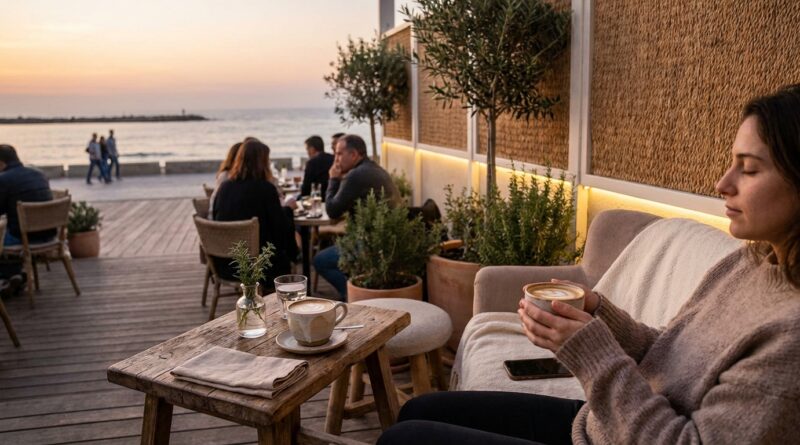
Why Tel Aviv Port’s ‘Invisible Wellness Coffee Corners’ Are Quietly Becoming the City’s New Mental-Health Micro Break
You can feel it when your brain is full. Not dramatic burnout, not a full-on crisis. Just that steady hum of too many messages, too much noise, too many people needing something. And when that happens, the usual fixes often make it worse. Another app means more screen time. Another café means more chatter, more music, more decision-making. That is why the rise of invisible wellness coffee Tel Aviv port spots matters. These are not “wellness experiences” with a neon sign and a branded breathing exercise. They are calmer corners built into normal life, places where the lighting, seating, sound and pace quietly help your nervous system settle. At Tel Aviv Port, Cafe Nimrod is becoming one of those places. Not because it promises to transform you, but because it offers something rarer. A short, screen-free pause that feels easy enough to repeat. For stressed workers, students and parents, that may be the most useful kind of mental-health break there is.
⚡ In a Hurry? Key Takeaways
- Tel Aviv Port’s quieter coffee corners are working as “invisible wellness” spaces because they lower stimulation without asking you to do anything complicated.
- Use Cafe Nimrod as a 10 to 20 minute reset. Put your phone away, choose a low-traffic seat, sip slowly and give your brain one simple job.
- This is a helpful coping ritual, not a replacement for mental-health care. If anxiety feels constant or severe, professional support still matters.
Why these coffee corners feel different
Most people do not need a life overhaul at 3:15 on a Tuesday. They need ten quiet minutes.
That is the heart of invisible wellness. It is wellness built into a space, not added as another task. You do not have to track it, optimize it or post about it. The environment does some of the work for you.
At Tel Aviv Port, that idea makes sense. The area already gives you one part of the reset for free. Open air. Walking space. A break from office walls. But the port can also be busy, bright and socially draining. So the real trick is finding a place inside that larger buzz where your body stops bracing.
Cafe Nimrod seems to hit that sweet spot for many locals. It offers the familiar comfort of coffee without the sensory pileup of trendier, louder spots. That matters more than it sounds.
What “invisible wellness” actually means in real life
The phrase can sound a bit fancy, but the idea is simple. A place supports your mental state quietly, through design and atmosphere, instead of making wellness feel like homework.
It reduces friction
You do not need a class booking, a membership or a guided session. You just walk in, sit down and exhale.
It lowers stimulation
Good invisible wellness spaces tend to have softer sound levels, less visual clutter, comfortable seating and enough personal space that you do not feel crowded.
It feels normal
This is a big one. Many people resist “self-care” because it can feel performative or expensive. A coffee break feels familiar. That makes it easier to repeat, which is where the real benefit comes from.
Why Cafe Nimrod works as a mental-health micro break
Think of it less as a destination café and more as a nervous-system pit stop.
When people talk about needing a break, they often mean one of three things. They need to stop responding. They need less noise. Or they need a place to be alone without feeling isolated. A well-placed coffee corner can help with all three.
At Cafe Nimrod, the value is not just the drink. It is the permission structure. You can sit without needing to impress anyone. You can look at the sea, watch people pass from a slight distance, and let your attention widen instead of pinballing between alerts.
That kind of setting can gently ease social overload. You are still in the world, but not swallowed by it.
How to use invisible wellness coffee Tel Aviv port style
This part matters. A calming space helps, but how you use it makes the break actually restorative.
1. Keep it short on purpose
You do not need an hour. In fact, a shorter break is often better because it feels realistic.
Aim for 10 to 20 minutes. Long enough to settle. Short enough that you will actually do it again tomorrow.
2. Put your phone out of reach
Not face down on the table. Not “just checking one thing.” Put it in a bag or pocket.
If you use your break to catch up on messages, your brain is not really taking a break. It is just changing screens.
3. Pick the least demanding seat
Choose a spot with lower foot traffic if you can. Near a window or edge is often better than the middle of the action. You want some visual interest, but not constant interruption.
4. Give yourself one job
Try one of these:
- Drink your coffee slowly and notice the warmth.
- Look outside and name five things you can see.
- Take ten slower breaths without forcing them.
- Let yourself think about one problem only, not all of them.
The goal is not to “clear your mind.” For most people, that just creates more pressure. The goal is to reduce input.
5. Leave before it turns into another task
This sounds odd, but it helps. End the break while it still feels light. If you stretch it too long, you may start checking work again, doomscrolling or feeling guilty for being away.
Who gets the most out of this kind of break
Honestly, almost anyone who is overstimulated.
For office workers
If you spend your day toggling between Slack, email and meetings, a screen-free coffee stop gives your attention a chance to stop fragmenting.
For students
When your brain is fried but you still need to study later, a low-pressure reset can work better than powering through until nothing sticks.
For parents
If your day is full of other people’s needs, a predictable 15-minute pause can feel less like luxury and more like maintenance. Because that is what it is.
What this is not
It is not a cure for anxiety. It is not therapy in a cup. And it is not magic because the chair is nice and the espresso is good.
What it is is a practical support. A small, repeatable ritual that can reduce the baseline feeling of being “on” all the time. For many people, that is enough to make the rest of the day feel more manageable.
If your stress is constant, sleep is suffering, or panic and low mood are taking over daily life, a coffee break should sit alongside proper support, not replace it.
Why this trend is growing now
Because people are tired of wellness that behaves like a second job.
The bigger shift heading into 2026 is away from giant self-improvement projects and toward subtle changes in everyday environments. Better lighting. Quieter corners. More comfortable public spaces. Places that ask less from us while giving a little more back.
Coffeehouses are perfect for this. They already fit into daily routines. Add thoughtful design and a calmer pace, and they stop being just refueling stations. They become emotional reset points.
That is why invisible wellness coffee Tel Aviv port is more than a niche idea. It is part of a wider move toward mental-health support that feels human-sized.
How to make Cafe Nimrod a repeatable ritual
The power is not in going once. It is in making the visit easy enough that it becomes part of your week.
Attach it to an existing habit
Go after your morning school drop-off. Before your afternoon shift. Between classes. After one specific meeting. If it already has a place in your routine, you are more likely to keep it.
Set a tiny goal
Not “become calmer.” Try “sit for 12 minutes without looking at my phone.” Small goals are easier to keep, and that gives your brain a sense of relief instead of failure.
Notice the after-effect
Do you speak more softly after? Rush a little less? Feel less irritable? Those subtle changes are the point. Invisible wellness often works quietly.
At a Glance: Comparison
| Feature/Aspect | Details | Verdict |
|---|---|---|
| Traditional café break | Can be pleasant, but often comes with loud music, crowding, laptop glare and pressure to keep consuming content. | Good for socializing, less reliable for real decompression. |
| Mindfulness app break | Structured and useful for some people, but still keeps you on a device and can feel like another task to complete. | Helpful tool, but not ideal if screens are part of the problem. |
| Cafe Nimrod micro break at Tel Aviv Port | Short, screen-free pause in a calmer setting with enough ambient life to feel connected, but not overloaded. | Best for realistic, repeatable nervous-system resets. |
Conclusion
Sometimes the most helpful mental-health habit is not a dramatic new routine. It is a quieter place to sit for fifteen minutes. That is what makes spaces like Cafe Nimrod so useful. They turn a normal coffee stop into a gentle form of support, one that does not ask you to download anything, track anything or become a better version of yourself before lunch. As 2026 wellness trends keep moving toward subtle design changes in everyday spaces, coffeehouses are becoming part of that shift. For Tel Aviv locals, using a short visit to Cafe Nimrod as an invisible wellness practice can be a realistic way to lower anxiety, soften social overload and build a screen-free micro break into daily life. Not a grand transformation. Just a calmer nervous system, one small port-side pause at a time.