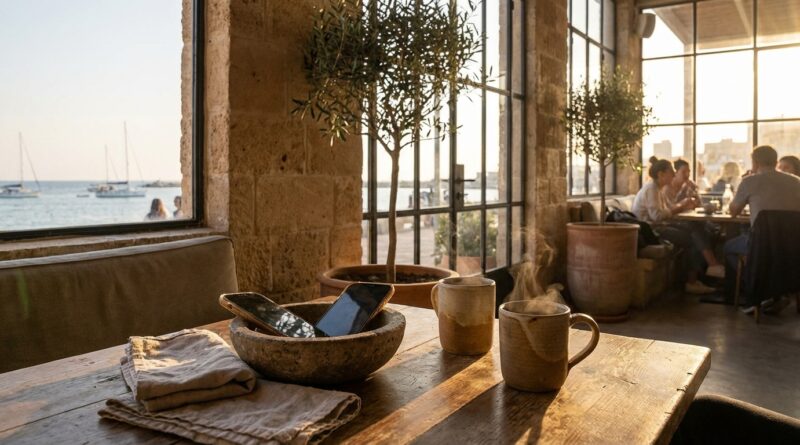
Why Tel Aviv Locals Are Quietly Turning ‘Phone‑Free Coffee Corners’ Into Their New Daily Digital Detox
You know the routine. You sit down for a coffee, tell yourself you will just check one message, and 20 minutes later you have read bad news, watched three unrelated videos and answered a work email you did not need to answer yet. Instead of feeling recharged, you leave feeling jumpy. That is exactly why some Tel Aviv locals are quietly gravitating toward phone-free coffee corners at the port, especially spots like Cafe Nimrod. The idea is not strict punishment or some smug anti-tech rule. It is softer than that. Put the phone away for one drink, one conversation, or even just ten minutes, and let your brain come down a notch. In a city that moves fast, with the sea in front of you and notifications in your pocket, that small break can feel bigger than you expect. It is a digital detox that does not ask you to leave modern life behind. It just asks you to pause.
⚡ In a Hurry? Key Takeaways
- A phone free cafe digital detox coffee Tel Aviv port trend is growing because people want a real break, not more screen time with espresso.
- Start small. Put your phone in a bag or face down for just one coffee and notice how your mood changes.
- The best version is voluntary, not preachy. That makes it easier, more social, and more likely to stick.
Why this is catching on now
People are tired. Not just busy. Tired in that odd modern way where your body is sitting still but your attention is sprinting all day.
That is a big reason phone-free spaces are getting fresh attention right now. Gen Z and millennials, especially, are looking for places that feel human again. Not perfectly curated. Not built around posting. Just places where you can drink coffee, look around, and maybe talk to someone without your thumb twitching toward a screen.
Tel Aviv Port is a perfect setting for this shift. It is lively, social, and full of movement, but it also has room to breathe. A cafe tucked into that setting can become a kind of reset button. Not a retreat in the desert. Just a small corner where your brain gets a chance to stop refreshing.
What makes Cafe Nimrod different
The appeal is that it feels voluntary. That matters.
Most people do not want to be scolded about their phone habits while ordering a flat white. A soft digital sanctuary works better because it removes the pressure. No one is confiscating devices. No one is acting morally superior. The point is simple. If you want 15 or 20 minutes of real quiet, real company, or real sea air, here is a place that makes that easier.
That low-pressure approach is smart. It turns the cafe into a welcoming third place rather than a rule-heavy experiment. You can come alone and just stare out for a while. You can come with a friend and actually finish a conversation. You can even keep your phone nearby and still choose not to touch it. For a lot of people, that is realistic progress.
Why your coffee break feels worse with your phone
Your brain never gets the memo that you are resting
When you scroll during a break, your mind is still switching tasks. News. Messages. Photos. Work chat. Weather. Back to messages. It looks passive, but it is not restful.
That is why you can sit in a beautiful cafe by the water and somehow leave more drained than when you arrived. Your eyes had a break from your desk, but your attention did not have a break from demand.
Micro-stress adds up fast
A phone buzz. A headline. A read receipt. A video you did not mean to watch. None of these seem huge on their own. Together, they keep your nervous system humming in the background.
Take those away, even briefly, and something shifts. You hear dishes clink. You notice the breeze. Your shoulders drop a little. That is not magic. It is just what happens when your mind is not being constantly poked.
What a good phone-free cafe actually offers
The best phone-free cafes are not about being trendy for the sake of it. They solve a real problem.
- A clear social cue that it is okay not to be online every second.
- A setting where talking to the person in front of you feels normal again.
- A short, manageable break that fits real life.
- A sense of permission. You are not being lazy. You are resetting.
That last part is bigger than it sounds. Many people need permission to pause. A place like Cafe Nimrod gives that pause a home.
How to try your own 20-minute digital detox
Do not overcomplicate it
You do not need a full wellness plan. Start with one coffee. One pastry if you are lucky. Put your phone in your bag, not on the table. If that feels dramatic, put it face down and on silent. Tiny changes count.
Give your eyes somewhere else to go
Look outside. Watch people walk by. Notice the sea. Bring a paper notebook if that helps, but do not turn this into homework. The point is not to optimize your break. The point is to have one.
If you are meeting someone, make it a shared rule
Try saying, “Let’s do this coffee without phones.” Most people feel relieved when someone else suggests it first.
Why this matters beyond one cafe
This is also about the slow disappearance of easy public spaces where people can just exist. Not shop efficiently. Not perform online. Not rush. Just exist.
That is why the phone-free cafe idea hits a nerve. It is not only about screen fatigue. It is about rebuilding the habit of being present in a place with other people. A port cafe can become more than a coffee stop. It can become a little community hub for anyone who wants to feel grounded without feeling judged.
And that may be the smartest part of the whole thing. It does not ask people to reject technology. It just asks them to put it back in its place for a few minutes.
At a Glance: Comparison
| Feature/Aspect | Details | Verdict |
|---|---|---|
| Phone use policy | Soft, voluntary phone-free atmosphere rather than strict enforcement | Best for most people. Welcoming, not awkward |
| Mood benefit | Can lower overstimulation and help a short coffee break feel like actual rest | High value for a 10 to 20 minute reset |
| Social experience | More eye contact, better conversation, stronger sense of place | A real upgrade over silent scrolling at the table |
Conclusion
The rise in interest around phone-free dining and digital detox spaces is not random. People, especially Gen Z and millennials, are actively looking for experiences that feel real, grounded, and social instead of relentlessly online. That is why a spot like Cafe Nimrod stands out. Inside a busy urban port, it offers something surprisingly rare. A low-pressure chance to reclaim your attention and mood in under 20 minutes. No lecture. No guilt. Just a coffee, a seat, and a little breathing room. In a moment when screen fatigue, mental health, and the loss of welcoming third places are all part of the conversation, that kind of soft digital sanctuary feels less like a gimmick and more like a public service. If you have been meaning to take a break from your phone, this may be the easiest place to start.