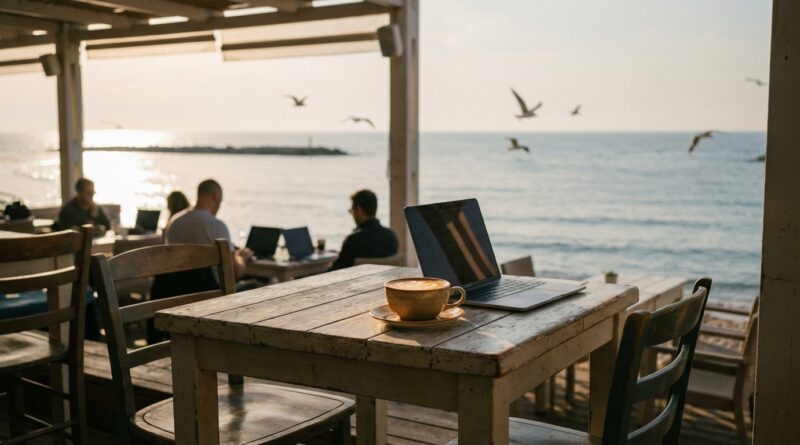
From Zoom To Zula: Why Remote Workers Are Quietly Claiming Tel Aviv Port’s Cafés As Their New Office
If you have tried taking calls from a tiny apartment, balancing a laptop on a crowded café table, or paying too much for a coworking desk you barely use, the appeal of Tel Aviv Port makes perfect sense. Remote workers are not going there by accident. They are going because the seaport solves a very modern problem. It gives you space, light, decent coffee, a sea breeze, and just enough background buzz to feel alive without frying your brain. That matters more than people admit. For freelancers, startup founders, consultants, and hybrid employees, a good work spot is not a luxury anymore. It is damage control for focus, mood, and energy. The quiet shift toward a remote work cafe Tel Aviv port routine is really about finding a place that feels human again. Not home. Not HQ. Something in between, where you can answer emails, finish a deck, and still feel like you saw daylight.
⚡ In a Hurry? Key Takeaways
- Tel Aviv Port is becoming a go-to remote work base because it offers a rare mix of calm, energy, scenery, and easy café access.
- Go with a plan. Pick a quieter morning slot, bring headphones and a charged laptop, then use one café stop as a focused two-to-three-hour work session.
- It is a flexible, lower-cost alternative to coworking, but only works well if you are respectful of café space, staff, and peak hours.
Why remote workers are drifting toward the port
People usually say they want a better place to work. What they really want is a better way to feel while working.
Home can be distracting. Coworking spaces can feel too polished, too expensive, or weirdly lonely. Big chain cafés often have harsh lighting, loud music, and that unspoken pressure to leave the second your cup is empty.
The port hits a sweeter middle ground. You can sit down with real coffee, open your laptop, get a few solid hours in, then step outside and reset your head with a short walk by the water. That simple shift matters. It breaks the claustrophobic loop of home-office-home.
It is part of the reason spots along the seafront are now being treated as a kind of unofficial third office. If that idea sounds familiar, it connects closely with Why Tel Aviv’s Port Cafés Are Becoming the City’s New ‘Third Place’, which gets at why these spaces feel more welcoming than a standard workplace.
What makes a good remote work cafe Tel Aviv port option
Enough energy, not too much noise
The best work cafés are not silent. Total silence can feel tense. But they also are not chaotic. At the port, many workers are looking for that sweet spot where there is movement around them, but not the kind that wrecks concentration every two minutes.
Natural light and open air nearby
This sounds small until you spend eight hours without it. One of the hidden benefits of working near the sea is that you can reset fast. Five minutes outside can do more for your attention than another espresso.
Tables that actually work for laptops
Not every pretty café is good for work. You need stable seating, enough table space, and ideally access to a plug or at least a battery plan that will last. Smart remote workers learn to scan the room before ordering.
A menu you can stretch without guilt
You do not need a full meal every time. But it helps if a place offers coffee, water, something small to eat, and maybe one follow-up order later. That way you can stay productive without feeling like you are camping unfairly on one cappuccino.
How to turn one port café visit into a productive work block
1. Pick the right time
If you want deep focus, go earlier. Late morning often works better than lunchtime. You will usually get calmer seating, easier ordering, and fewer groups.
2. Split your tasks before you arrive
Do not show up with a vague plan to “catch up on work.” That is how two hours disappear into inbox cleaning. Instead, choose two or three tasks that fit a café setting. Good examples are writing, planning, light design work, admin, and one-on-one calls with headphones.
3. Save heavy calls for the edge of the session
If you need to speak in meetings, do them early before the room fills up, or step outside briefly if the setting allows. A packed café is not the place for a confidential team debate.
4. Bring a simple work kit
Keep it light. Laptop, charger, phone battery, earbuds or headphones, and maybe a notebook. The whole point is to make working there feel easier than going to a formal office, not like packing for a weekend trip.
5. Use the location, do not just sit in it
One overlooked trick is to build in a short walking break. Finish a task, close the laptop, walk the boardwalk for ten minutes, then decide if you want another hour of work or if your brain is done. The port works best when you let the place reset you a little.
Who benefits most from this setup
Not every job fits a café. But for a lot of people, the port is surprisingly practical.
Freelancers
If your work is project-based, creative, or client-facing, a few hours in a fresh environment can stop the day from feeling stale.
Startup founders
Founders often need somewhere between total isolation and full office politics. A port café can be good for strategy work, investor emails, hiring notes, or informal meetings.
Hybrid employees
On work-from-home days, some people just need to get out of the apartment without turning that escape into a major production. The seaport gives them a reliable change of scene without the commitment of a monthly desk pass.
Solo consultants and therapists between sessions
If your day has gaps in it, the area can work well as a temporary base where you can prep, write notes, or decompress before the next appointment.
The unspoken rules of working from cafés
This part matters. A café is still a café, not your private office.
Order like a decent human. If you stay a while, buy more than one item. Do not spread your gear across a four-person table when the place gets busy. Use headphones. Keep calls short and low-volume. And if staff look slammed, do not act shocked that your “office” is also serving actual customers.
These habits are what make the whole remote work cafe Tel Aviv port culture sustainable. If regulars treat the space well, cafés are more likely to welcome laptop workers instead of quietly resenting them.
Why this shift says something bigger about work culture
This is not just about pretty views and better coffee foam. It says something about what remote work is missing.
People were told flexibility would solve everything. In reality, flexibility without structure can turn into isolation, blurred boundaries, and low-grade burnout. That is why workers are searching for grounded places with a bit of life in them. They want somewhere to focus, yes, but also somewhere that reminds them they still live in a city full of people.
That is the real appeal of the port. It feels public, social, and open, without demanding too much from you. You can work, pause, look up, and rejoin the world for a minute.
At a Glance: Comparison
| Feature/Aspect | Details | Verdict |
|---|---|---|
| Noise level | Usually livelier than home, but often less cramped and harsh than many indoor city cafés if you choose the right hour. | Good for focused solo work, less ideal for long sensitive calls. |
| Cost | Pay-as-you-go coffee and food is often far cheaper than a coworking membership for people who only need occasional workspace. | Strong value if you work in short, intentional sessions. |
| Mental reset | Sea air, open views, and walkable surroundings make it easier to break stress loops and avoid feeling stuck indoors. | One of the biggest reasons the port stands out. |
Conclusion
There is a reason more people are quietly building a work routine around the seaport. It is not just trendy. It works. When flexible work starts feeling draining instead of freeing, a calm café by the water can become the missing middle ground between isolation at home and the stiffness of a formal office. One thoughtful visit can turn into a simple, repeatable “third office” that helps you focus, feel less alone, and support local cafés at the same time. You do not need a membership, a full day off, or a dramatic lifestyle overhaul. Sometimes you just need a decent table, a good coffee, and a place that lets your brain breathe again.